A Day in the Life of a Program Manager: Meighann Helene on Wearing Many Hats at IBM, Life as an Artist in Residence, and Dancing With Fire
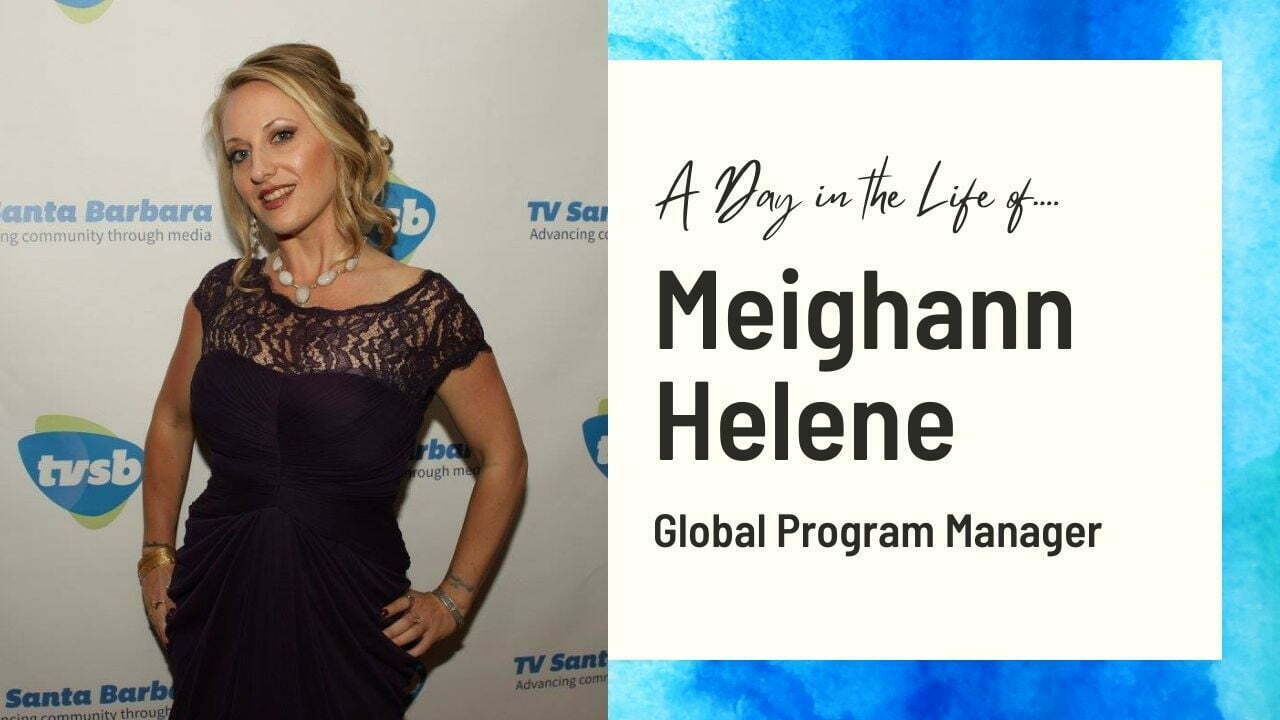
Meighann Helene has spent three and a half years at IBM, moving from communications to the company’s Data Science and AI Elite team, where she now holds two roles at once. By day she is a program manager, a digital strategist, and a user experience designer. By night she is a fire dancer.
The surprising part is that none of those titles cover the half of it. Meighann is also a filmmaker with a wall of festival laurels, a nonprofit board member and former city arts commissioner, and an artist in residence who lives in a Santa Barbara maker space a seven-minute walk from the beach.
This is the full picture: what her program-management work looks like, the strategic path that got her there, and the very full life around it.
What a program manager actually does at IBM
I wear a lot of different hats, and I have just as many shoes for every one of those hats.
Meighann Helene
On paper, Meighann sits on the Strategy and Growth subteam inside IBM’s Data Science and AI Elite team, and she carries two roles that span it. As the global digital strategy and growth strategist, she owns the team’s digital assets: websites, content, webinars, and video production. Her second role is more technical: user experience quality assurance for the industry accelerators, the packaged data-science use cases IBM builds to solve common business problems. She handles the UX QA, designs the user interfaces, and works on process efficiency, the kind of user-experience craft that sits close to product and UX design.
A real day swings hard depending on the week. Some days are eight straight hours of meetings. Most days center on design and optimization: mapping personas, interviewing users, and making sure a given dashboard or process solves the problem it was built to solve. She has reshaped her days around where she lives, taking phone-only meetings as walks to the beach and moving others to the rooftop and picnic areas of her building.
How Meighann became a program manager
Her path was long and deliberately non-linear. She earned five associate degrees at Santa Barbara City College, in philosophy, graphic design, multimedia, behavioral sciences, and arts and humanities. She laughs about it now and says she would tell a younger version of herself to skip about three of them. Then she went to Berkeley as an older, returning student and studied cognitive science, a major that spans linguistics, psychology, philosophy, and the neuroscience of the brain. Her aim in going back was specific: to focus on user experience from the molecular level of the brain up to the philosophical, and to use that whole range to design better systems and experiences.
The move into IBM was strategic from the first email. While still at Berkeley, Meighann saw a posting for a full-time communications specialist, an entry-level opening in an industry she was moving on from. She had already spent years as a director and a manager. Instead of passing, she wrote back, said plainly that she was overqualified, and asked whether anything else was open for the summer. There was not, yet, so IBM created an internship, and she competed for it and won. Her reasoning was sharp: a communications role would put her in front of executives far faster than a developer seat would, because she would be doing executive comms.
What followed was a grind she took on by choice. The internship became a part-time student associate position, extended twice, during which she drove down to IBM’s Silicon Valley Lab at four in the morning on Mondays and left at noon to make a class that ran from two to eight. It turned into a communications management role. From there she stepped up to global program manager for IBM’s Machine Learning Hub, steering a major redesign and the project management underneath it.
This is a good place to clear up a common mix-up that matters if you are searching for the right title. A project manager runs a single project end to end: its scope, its timeline, its deliverables. A program manager works one level above that, coordinating the larger initiative and the multiple projects and people inside it. Meighann’s Machine Learning Hub work was program management in exactly that sense, a redesign plus all the project management it contained, and it pulled her deeper into both the technical and design sides of the company. Anyone weighing the two titles will find the distinction laid out further in finding your path to project management.
That role opened the door to the Data Science and AI Elite team, where the Strategy and Growth group ran almost like a startup inside IBM. She joined as digital strategist, then picked up her second, current role in UX QA when the team lost people and did not backfill. She had a number in mind the whole time.
How to become a program manager
Meighann’s route was long, but the strategy inside it is worth copying. She took an entry-level role she was overqualified for because she had researched IBM’s strong internal mobility and decided that a foot in the door beat holding out for a perfect title. Once inside, she built relationships well past her own department, at art events, women-led groups, and the office salsa classes where she met colleagues who later opened doors. She also drew on a genuinely multidisciplinary background, pairing behavioral science and design with enough technical fluency to earn a seat on a data-science team. The throughline was patience with a target attached.
My long game plan was to get my foot in the door, meet the right people, work on the right projects, and get to user experience within three years, and I basically accomplished that.
Meighann Helene
Her blend of strategy, coordination, and design shows up in nearby tracks too, from the product manager to the software engineering manager, where the same skill of moving people and projects toward one outcome carries the role. Her leap out of a director title and into an entry-level comms seat will also look familiar to anyone who has changed careers on purpose.
The best and hardest parts of the work
The best part is the variety, the many hats, and the chance to bridge art and technology. Her favorite thread through all of it is human-centered design, which is also where her frustration lives. She is a loud advocate for STEAM over STEM, keeping the arts in the acronym on purpose.
It’s one of those things that boils my blood when I see STEM, because they’re really missing a critical aspect to what can help us progress, which is the art.
Meighann Helene
Her case for it is practical. Bringing artists and designers into technical work, she says, forces teams to remember who they are building for, surfaces the real root of a problem instead of the first symptom, and opens up creative approaches like gamifying how kids learn to code. She points to Processing, a coding language used mostly by artists, as proof that art and engineering feed each other, and she doubts it would exist in its current form without artists who wanted to build with code.
The hardest parts are honest costs. Some days vanish into eight hours of back-to-back meetings, and the climb itself asked a lot, from four-in-the-morning commutes to a current double role she absorbed when the team lost people and did not backfill. She treats all of it as the price of a fast, deliberate rise.
Is program management a good career? What Meighann’s path shows
Her take is optimistic and strategic. IBM’s internal mobility let her reinvent her role several times, and she hit her three-year target for landing in user experience. The honest caveat: the payoff grew out of relentless strategy and a stack of unglamorous hours. What keeps her looking ahead is AI ethics, a niche she is convinced her broad, human-centered background is built for as data science reaches further into everyday life.
The life around the work
This is the personal half, and with Meighann it is nearly a second full-time life. She lives at a Santa Barbara live-work community for art, science, and technology, where she is an artist in residence, a spot she won through an application process and now holds for the second time. Her first, a five-week residency in one of the penthouses, ended in a solo show built around a 3D-printed project about light and shadow. She reapplied during the pandemic, after an unexpected move left her living out of storage units and Airbnbs, and decided a residency was the steady answer. The place runs about a dozen units and a rotating cast of nine to seventeen residents, from designers and musicians to a NASA scientist, and it comes with a full maker space, a sauna and hot tub, and a monthly art critique where residents put up their work for feedback.
Her own art is hands-on and a little alchemical. She cold-casts real feathers and sand dollars in bronze, then uses a chemical process to force very specific oxidation, painting the metal as it rusts before sealing it in resin as jewelry. Her recent solo series, Rusted Roots, does the same abstractly with iron, copper, and bronze on treated wood. She describes the whole practice as doing organic things to organic materials in inorganic ways. When she is deep in a series, she is happily covered in paint for a week and a half.
She also makes films. Before the pandemic she was in production on a Santa Barbara feature with a longtime collaborator, and their projects together have pulled in around twenty festival laurels. Producing and directing might be her favorite work of all.
Dance is her steadiest release. Two or three times a week she goes to ecstatic dance and silent-disco sessions on the beach, headphones on, and she treats it as non-negotiable. She calls it her church and her therapy. At night she dances with fire, spinning fire fans into shapes that can get genuinely mathematical, and she finds the whole thing meditative and empowering.
We owe so much of our existence to fire as a human species, and there’s something really beautiful and empowering about understanding fire and dancing with it and feeling the power it’s had for us.
Meighann Helene
Her volunteer life carries the same conviction. She serves as treasurer of Fishbone, a donation-funded nonprofit that brings artists, engineers, and scientists together for free community events and classes, and she sits on the board of the local public-access TV station, which she cheerfully calls Wayne’s World for Santa Barbara. That work runs real media-literacy programs, from kids’ camps to sessions teaching seniors how to spot an internet scam, all on the belief that everybody has a voice worth equipping.
Much of that drive comes from her own story. Meighann grew up without much money or any expectation of college, and she says she never pictured herself earning a degree, let alone one from Berkeley. As her footing became more secure, she committed to giving back more than she takes, especially to women in tech and STEAM and to the LGBTQ+ community, of which she is an open member. She came out publicly this past year, choosing to do it during a coming-out webinar a colleague was hosting, in the hope that her own openness makes it easier for someone else to be themselves.
FAQ
A few of the questions people ask most about program management and Meighann’s unusual path, answered from what she shared.
What is a program manager, and how is it different from a project manager?
A project manager runs a single project from start to finish, owning its scope, timeline, and deliverables. A program manager works one level up, coordinating the larger initiative and the multiple projects and teams inside it. As global program manager for IBM’s Machine Learning Hub, Meighann steered a full redesign along with the project management underneath it.
How did Meighann Helene get into program management at IBM?
She took an entry-level communications role she was overqualified for, betting on IBM’s strong internal mobility, then moved through comms management and a program-manager post to the Data Science and AI Elite team. She credits meeting the right people across the company as the real driver.
What does a program manager do all day?
Days vary widely. Some are eight hours of meetings; most mix design, optimization, and user-experience work like building personas and interviewing users, aimed at making sure a system solves the right problem.
Do you need a specific degree to become a program manager?
There is no single required degree. Meighann’s own background is deliberately multidisciplinary, five associate degrees plus a Berkeley cognitive-science degree, and she says a mix of technical fluency and human-centered design mattered more than any one credential.
Is program management a good career?
Meighann thinks so, pointing to the variety and the room to reinvent her role without changing companies. She is candid that the payoff came from steady strategy and some demanding hours.
Final thoughts
The thread in Meighann’s story is that she trusted the full range of who she is instead of filing most of it away. She kept the artist and the strategist, the dancer and the program manager, and then built a career and a life roomy enough to hold all of them at once. She never waited for permission to wear every hat.
If you stopped treating your other interests as distractions from your real work, which one would you pick up first?