A Day in the Life of a Product Manager: Thomas Chu on 20 Years at IBM and Betting on Himself
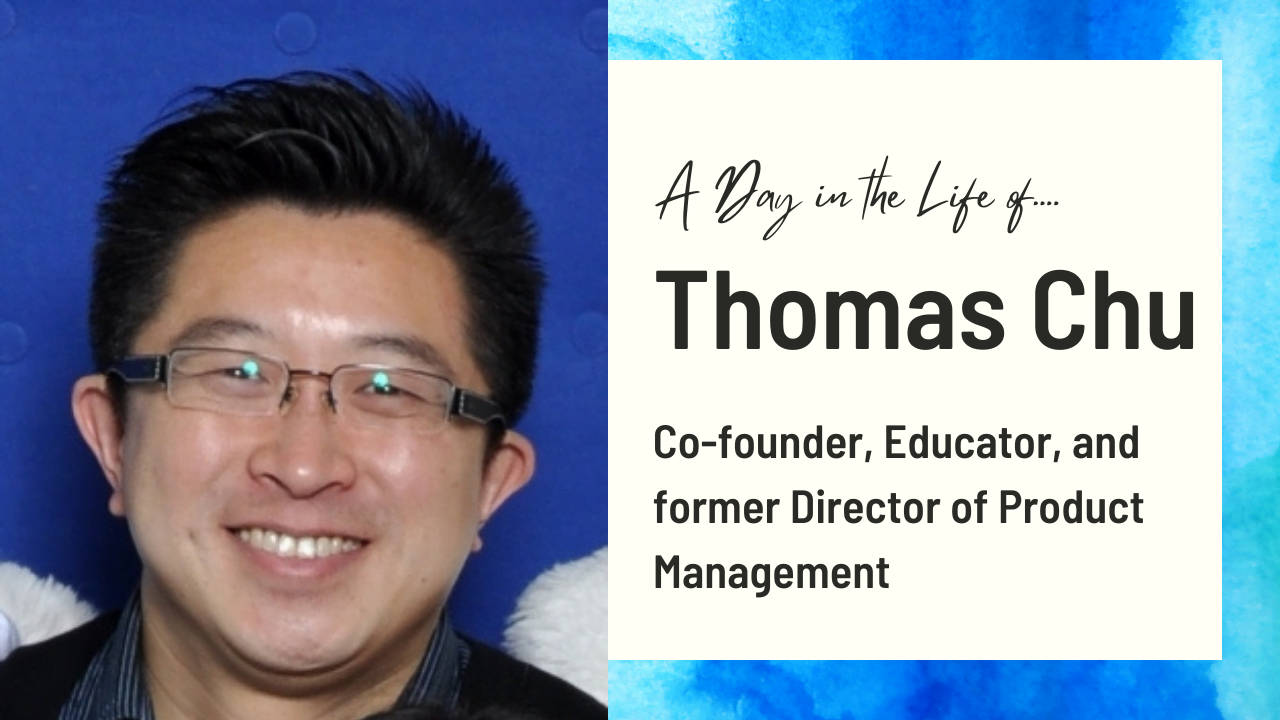
Thomas Chu spent twenty years at IBM, most of them building a single database product, before a vice president asked him to manage it. Five years later he was a director of product management. Then, three months after his twentieth anniversary, he walked away to run Iron Tutor, the education company he and his wife had been quietly building on the side for fifteen years.
His story lands as one idea rather than two. The same instinct that made Thomas good at product management, treating the whole thing like a business he personally owned, is the same instinct that let him leave a secure career and bet on himself. This is the full picture: how he got in, what the work is really like, and the life he built around it.
From car salesman to IBM: how Thomas got in
Thomas did not arrive at IBM on a straight line. He studied mechanical engineering at the University of Toronto, moved back to Asia and worked in the car industry for years, then returned to Canada with, in his words, not a lot of Canadian experience. For a short stretch before IBM he sold cars at a friend’s dealership, mostly because he was bored at home. He learned to talk to strangers and make a sale, and he later called it one of the best experiences of his life.
He is refreshingly honest about the interview that got him hired during the dot-com boom. Partway through, the hiring managers were asking database questions he could not answer.
Halfway through I said, let’s not talk about that. I can’t answer that well. Let me tell you what I did as a project manager, and how I worked with people.
Thomas Chu
Then the hiring manager noticed Thomas had worked for a car company, realized he drove the same brand, and the two of them spent the rest of the time talking about something other than software. Thomas figured he had bombed it. Two days later they hired him. Years later he learned there had been a real debate about whether to bring him on at all, because he lacked the industry background. He has never forgotten that someone went to bat for him.
What does a product manager actually do?
Ask Thomas what a product manager is and he does not describe a process. He describes a mindset.
The mindset is really about being an entrepreneur, a business owner. No matter what you’re managing or selling, boil it down. Imagine you run a little two-person shop. What are you selling? How does someone buy it? What’s the price? What’s the experience? Answer those fundamental questions, more like a salesperson.
Thomas Chu
He is wary of product managers who live entirely in the mechanics. The ones who make a product thrive, he says, put themselves in the customer’s shoes and obsess over the experience of buying, using, and getting support, not just the product itself. And he insists the job rewards range over depth:
It’s like the decathlon. You don’t have to be the best in any one of the ten sports, but you need to be good overall. Sometimes a very deep skill can even become a hindrance.
Thomas Chu
Horizontally good, rather than deep and vertical.
How to become a product manager (without the “classic” background)
Thomas came to product management from engineering, after fifteen years building the very product he was later asked to manage. He never did an MBA. So his advice for getting in is grounded in his own unlikely path.
First, backgrounds vary wildly. He has seen people arrive at product management from technical, marketing, and finance roles, and only a few from a “classic” product track. Second, when he hires, he leads with the person, not the resume:
I could not care less whether you know SQL or have a scientific background. Those things can be learned. I hire for attitude, for how you work with people, for the commitment you’ve made to your own excellence.
Thomas Chu
Third, in a field where you interface with dozens of people a day, your reputation and network do a lot of the work. He encourages people to build a real presence, find mentors, and even cold-call a leader they admire, because a genuine recommendation from someone credible travels further than a perfect application.
And he wants people to reframe the job description itself:
I don’t treat a job description as a list of requirements. I treat it like a menu. You don’t order everything on it. If one responsibility speaks to you, that’s the dish you talk to the waiter about.
Thomas Chu
An interview, in his view, is two parties deciding if they fit.
It’s more like matchmaking than anything. The company is looking for someone, and you’re looking for a company. If it doesn’t fit, you both move on. There’s really no point being discouraged by a no.
Thomas Chu
For anyone eyeing a move into the field, that mindset pairs well with the practical side of making a career change and finding a path into project and product management.
What they don’t tell you about being an executive
When Thomas became a director, the biggest shift was something he calls the aperture.
As a staff member I didn’t understand why my boss made certain decisions. Once you see the information and the considerations they carry, it all makes sense. You’d make the same call in their seat.
Thomas Chu
And the part he thinks executives rarely get credit for:
If there’s one thing I lose sleep over as an executive, it’s my people. They don’t know how much I worry about whether they were happy at work that day.
Thomas Chu
He tells his teams that speaking up is a form of loyalty. His analogy is protest: you say something is wrong because you love the place, and it is your responsibility to say it. If a task is draining you, he wants to know, so the two of you can find a better fit. He sees it as basic to keeping a company aligned.
Why he left a 20-year career to bet on himself
This is the decision Thomas ranks alongside marriage and immigration. He did not make it lightly. A birthday milestone had him thinking about the next ten years.
When I look back on what I did in these ten years, do I want to keep doing what I’ve done for the last ten? Or do I want to do something different? COVID taught all of us that life is finite. You’ve got to do what you’ve got to do.
Thomas Chu
The leap was possible because he and his wife had planted the seed fifteen years earlier. When their second daughter was born, his wife, a lifelong math teacher who grew up around her mother’s small shop, wanted to open a little school for the neighborhood. Thomas had a stable income, so he told her to try it. They half-joked that maybe one day it would grow enough for him to join her.
That day arrived. The company was healthy, his two kids were grown and independent, and he saw a real need: he worried that two years of online school had let students earn high marks without genuinely learning. For the first time in fifteen years, Iron Tutor is now expanding beyond math into chemistry and physics. The hardest part of leaving, he says, was the people he worked with. It was the same kind of leap another guest described after she left data science to start her own company.
A day in the life now: learning to say no
Thomas is candid that corporate life in the last couple of years had become relentless, work bleeding into every hour at home, the always-on blur that has become the default in the digital age. What he values most in his new life is control over his own time, and permission to think.
Learn how to say no. I’m not good at it either. But make decisions based on your second or third thinking, not a knee-jerk reaction. If you’re driving in the wrong direction, it doesn’t matter how fast you go.
Thomas Chu
His days now have more room to sit with a decision before making it. Fewer reflexes, more direction.
The life around the work: music, a marriage of equals, and passing the torch
The half of Thomas that has nothing to do with product roadmaps is just as clear about what he values.
He is, by his own cheerful admission, an audiophile who spends real money on stereo systems. He loves classical music, and once, on a sales conference in Vienna, made sure to spend a night at a concert hall watching a great orchestra. One of his daughters is now studying classical music in college, and it has become a shared language: when he drives her back to school, they talk about the pieces she is playing, and knowing the composers, he says, is good for the father-daughter relationship.
He is generous about mentorship, which he treats as a debt he owes forward.
Mentorship is like a torch. People were gracious enough to teach me about life, and I want to pass that to the next generation. Even if two words out of an hour inspire someone, that’s priceless.
Thomas Chu
The one rule he is firm on: it has to be informal. Every mentor in his life came from working alongside someone and staying in touch, never from an arranged monthly meeting with a stranger. It grows out of real working relationships, and it lasts because both people keep reaching out.
He met his wife at university, where she studied electrical engineering and he studied mechanical. They dated for ten years before marrying. On the subject of a wife keeping her own last name after marriage, Thomas was reflective, because his wife kept hers.
She’s a strong, independent professional. Marriage is a partnership, two people building a family with trust and respect. It doesn’t mean one person becomes the other. I never expected her to change her name, and I respect her reasoning completely.
Thomas Chu
And he is proud of raising a family that honors its heritage inside a different country. He describes Toronto, where more than half the population was born outside Canada, as a genuinely multicultural city where his mother, who does not speak much English, gets through daily life without trouble. Iron Tutor’s logo even carries Chinese characters, a nod to how central tutoring is in the culture he comes from.
FAQ
A few of the questions people ask most about breaking into product management, answered from Thomas’s own experience.
Do you need an MBA or a technical degree to become a product manager?
No. Thomas came from engineering with no MBA, and he has hired product managers from technical, marketing, and finance backgrounds. He values attitude and people skills over any specific credential, because the hard skills can be learned.
What makes a good product manager?
Range over depth. A strong PM thinks like a business owner, understands the full customer experience from buying to support, and is “horizontally good” across many areas rather than an expert in only one.
How do you get a product management job with no direct experience?
Build your reputation and network, find mentors, and treat the job description as a menu rather than a checklist. A genuine recommendation from a credible person carries further than a flawless resume, and an interview is a mutual fit, not a plea.
Is product management a good career?
Thomas found it deeply engaging for the range it demands and the people work at its center. He is also honest that it is competitive and tiring, and that the leadership levels are defined less by perks than by responsibility for other people.
Final thoughts
The thread running through Thomas’s story is that he never split his career and his life into separate accounts. The same person who treats a product like a business he owns is the one who bet on his family’s little school, who measures a good day by whether his people felt valued, and who keeps a mentor for decades because it started over a beer, not a calendar invite. His authority always pointed inward, toward what he believed was worth doing next. That is its own kind of technology within, an internal capacity no title confers and none can take away. It may be the clearest example on this show of doing what you are meant to do, on your own terms.
When you look at your own next ten years, his question is a good one to borrow: looking back, will you want to have kept doing what you have already done, or something different? What is your honest answer?