A Day in the Life of a Product Designer: Annick Huber on Changing Careers from Illustration to UX, and Choosing Where to Live
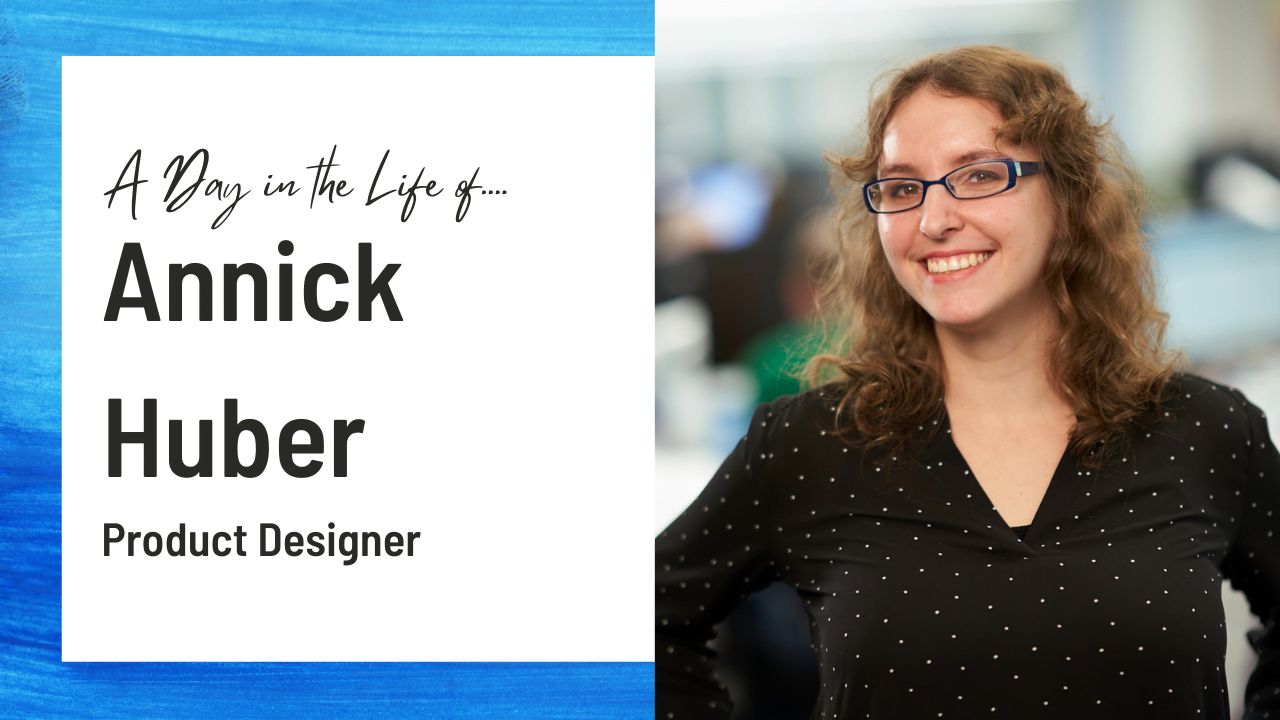
Annick Huber is a product designer who started out as an illustrator and game concept artist. She changed careers not because she stopped loving art, but because she wanted something art could not give her: the freedom to choose where she lived.
Her story is one of the clearest career-change arcs on the show, from fantasy book covers to game environments to user experience. This is the full picture: how she got here, what product design actually is, and the life around it.
From fantasy book covers to game worlds
Annick knew at thirteen that she wanted to be an illustrator. An avid reader of fantasy novels, she started studying the cover art, looking up the illustrators by name, even emailing one to ask how they did it. She chased that goal all the way through art school at SCAD, then pivoted into video games as an environment and concept artist, where she discovered a love for the puzzle inside the art.
Games have this modular aspect where you have to figure out how to maximize assets. A skyscraper asset is gigantic, and the memory can’t handle it, so you build it in pieces you can puzzle together. Those puzzles were what interested me most.
Annick Huber
She never did illustrate books, because book illustration meant freelancing, and freelancing meant constant self-promotion she found draining.
Why she changed careers into product design
The turn came from two directions. In an interactive-design class she got her first taste of UX, wireframing a website and thinking about its users, and she found she loved tinkering with her own portfolio site for the same reasons. Then reality intervened: after an animation studio lost a show and laid off half its staff, she watched her colleagues scatter to other cities.
That was the realization that the chasing is the job. If I wanted to keep this career, I’d have to keep chasing jobs around and build my life around the job.
Annick Huber
Having grown up moving every three years as the daughter of a diplomat, Annick had come to value the opposite: choosing a place and finding work there. Product design let her stay put, and she liked the software field more than repetitive animation work. It is exactly the kind of deliberate career change that reshapes a life, and it sits close to the games work she came from.
What is product design, really?
Annick has a clear take on a question that confuses a lot of people, including the difference between a UX designer and a product designer.
The activities are very much the same: research, wireframes, user journeys, prototypes, working with product and development. But a UX designer is a bit more project-oriented, often in an agency, while a product designer works more closely with the product team and has more ownership over the whole product experience.
Annick Huber
For anyone weighing those titles, she is a great guide to product design versus UX design. What ties her illustration and her design work together, she says, is visual communication: composition, whitespace, color, and the design principles that apply no matter the medium. Growing up speaking three languages, she is drawn to how visual communication works across barriers that words cannot cross.
A day in the life, in transition
When this conversation happened, Annick was thirty-nine weeks pregnant, so she was honest that her days looked nothing like they had six months earlier, when she worked regular remote hours from an office she had set up exactly to her liking, taking walks and tending to her health.
I’ve been enjoying remote work a lot. I set up my office exactly how I wanted, with access to all my books and resources, working fairly regular hours.
Annick Huber
On making art, and making time
Asked for advice for people who want to start making art but feel self-conscious, Annick is reassuring and firm.
The only way to get better at art is to make art. It’s not a skill people are born with. If someone seems naturally good, it’s because they’ve already put in their hours. The more you do it, the better you get.
Annick Huber
She loves art classes for the structure, supplies, and inspiring company, but insists you can start anytime, on your own. On work-life balance, her answer is scheduling and boundaries, and she is candid that a newborn will make her relearn all of it.
The life around the work
Annick’s fuller story is a deeply international one. She finished high school in Switzerland, took a year to learn English and see the United States, and chose art school in Atlanta after happening to walk past SCAD before her family even had a car. Her family is half Swiss and half Guatemalan, and as she prepared for her first child, her mother came to stay for months, in the Latino tradition that it takes a village.
She is also clear-eyed about what motherhood asks of American workers, having decided she would not take a job offering less than sixteen weeks of leave, and choosing instead to step away from work entirely for a while, a privilege she is quick to name as one.
There’s just not enough time given to mothers here. I decided to disengage from work for a bit and do this right for myself.
Annick Huber
FAQ
A few of the questions people ask most about becoming a product designer, answered from Annick’s own path.
How do you become a product designer?
Many product designers come from adjacent visual or research fields, illustration, graphic design, or UX. A strong grasp of design principles and user research matters more than a single degree; Annick moved from game art into UX and rounded it out with a master’s focused on research.
What is the difference between a UX designer and a product designer?
The day-to-day work overlaps heavily. A UX designer tends to be more project-oriented, often agency-based, while a product designer works closely with the product team, owns more of the overall product experience, and often handles more visual design.
Can you change careers into design from illustration or art?
Yes. Annick’s whole path is illustration to game art to product design, all unified by visual communication. The shared foundation, composition, color, and user-focused thinking, transfers directly.
Is product design a good career?
Annick chose it in part for stability and the freedom to choose where she lives, rather than chasing art jobs across cities. She finds the research and problem-solving genuinely engaging.
Final thoughts
The thread in Annick’s story is that she kept following the same love, visual communication, while letting go of the parts that no longer fit her life. She traded the chase of art jobs for a career she could root in one place, without giving up the thing that drew her in at thirteen. Changing careers, for her, was not abandoning her passion. It was carrying it somewhere it could finally stay.
What part of your work do you love, and what part have you outgrown? What would it look like to keep one and release the other?