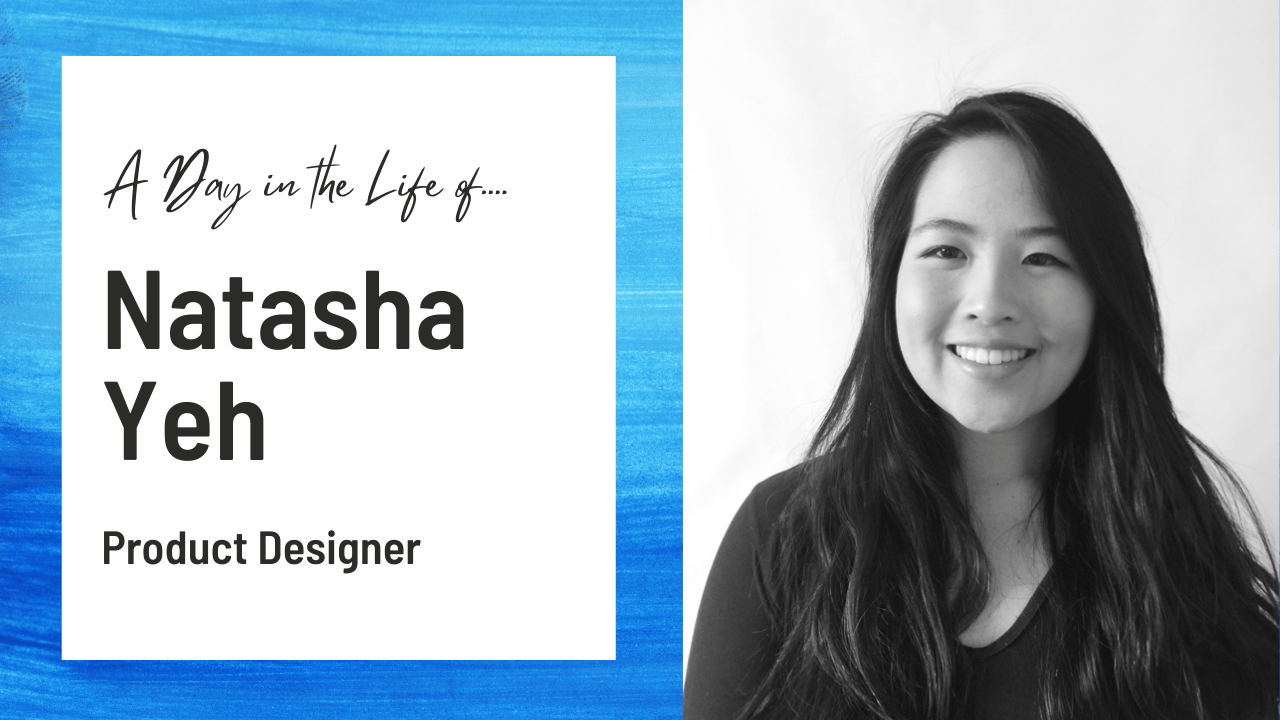
A Day in the Life of a Product Designer: Natasha Yeh on Illustration, an Adidas Prototype, and Product Design vs. UX Design
Natasha Yeh is a product designer at Atlassian, and she got there by drawing. As a kid she never put the pencil down, and she loved illustration enough to major in it at art school. On paper that reads like a detour away from tech. It turned out to be the on-ramp.
The turning point came in a college class sponsored by Adidas, where she built a sports bra prototype and the company bought the intellectual property from her. That was the moment she saw a career she had never pictured for herself.
This is the full look at that career: what a product designer actually does, how the role differs from UX design, the winding path Natasha took to get there, and the life she has built around the work, plants and public transit and Taiwanese food included.
What a product designer actually does all day
Natasha defines the role in plain terms: a product designer solves problems that sit where user needs and business needs overlap. She points to DoorDash as an example. Open the app and the first thing you see is top-rated restaurants near you, inside a five-mile delivery radius. That placement is a design decision serving two goals at once, the customer who wants nearby food that can actually be delivered, and the business that earns its cut when those recommendations turn into orders.
Her actual days run on Australian time. Atlassian is an Australian company, and most of her team is in Australia, so her calendar splits cleanly in two. From nine in the morning until about three, it is heads-down focus work with almost no meetings. Her afternoons and early evenings, roughly three to six, fill with calls as her colleagues wake up on the other side of the world. Their Fridays are her Thursdays and their Mondays are her Sundays, which took some getting used to whenever she books a mid-week meeting that lands on nobody’s weekend.
The work itself is her first real taste of agile. Her team spends most of its time in the discovery and define phase, the product-strategy part where you decide what problem you are solving before anyone builds anything. She contrasts that with the waterfall process she knew at IBM, where design would go off on its own, hand over finished screens at the end of the week, and only then hear from engineers whether the thing was even buildable. One moment at Atlassian stuck with her because it flipped the usual script.
It was interesting for an engineer to say, hey, let me collaborate with you guys better, because usually it’s us designers reaching out to engineers.
Natasha Yeh
That collaboration is the whole point of working this way. When designers, product managers, and developers stay in the room together from discovery through delivery, nobody spends two weeks polishing a feature that cannot ship. If you have ever wondered how these roles fit together, her world overlaps closely with a product manager and the software developers she designs alongside.
What’s the difference between product design and UX design?
This is the question the conversation keeps circling, and Natasha’s answer is refreshingly honest about how blurry the line has become. Technically, she says, there is a difference. A product designer is considered more full stack, expected to run an experience end to end: aligning product strategy to the business vision, then turning that into real, tangible designs. A UX designer, in the older definition, worried less about baking business decisions and constraints into the work.
That older split, in her view, no longer holds. After interviewing at many companies for both titles, she found the expectations were the same on both sides. Her test for whether a design actually matters is blunt.
If you’re not connecting your deliverables to any OKR or KPI, then are you even solving a problem?
Natasha Yeh
Her read, drawn from sitting through those interviews, is that UX design is maturing into product design. The job now assumes you can tie your screens back to a measurable outcome, whatever your title says on it. So the practical answer for anyone weighing the two: the daily craft looks similar, and the real dividing line is how much you own the business side of the problem, from strategy down to the metric.
How Natasha became a product designer
Natasha’s path was anything but straight. She channeled her creativity into illustration first, kept drawing all through childhood, and chose art school so she could keep doing it, majoring in illustration. She rounded that out with graphic design and motion graphics classes, and somewhere in there she noticed she was learning one skill in many disguises: how to tell a story with different tools and mediums. Something still felt unfinished, though.
The answer showed up the way good opportunities often do, through a challenge she almost talked herself out of. Every semester a big company would come to her school and build a course around a real problem for students to crack. One year it was Adidas, choosing fourteen students to help define the future of athleisure wearables. The class taught her user research, user testing, empathy, and how to work inside a budget, and her illustration background turned out to be the edge. She could draw the story where her classmates could only describe it.
I built this sports bra prototype, and Adidas ended up buying the IP from me. That was the moment where I was like, oh, I think I could be a product designer.
Natasha Yeh
That is a rare kind of pivot, illustrator to product designer, and it echoes other creatives who turned drawing into a career, like the comic book artist whose path also ran through the page. If your own plan has shifted underneath you, Natasha’s story sits comfortably next to anyone changing careers on purpose.
How to become a product designer
Natasha’s route offers a few concrete lessons for anyone eyeing the field. Build a real design foundation first, whether that is art school, graphic design, or self-taught practice, and then get your hands on an actual problem. The Adidas course did more for her than any lecture because it made her research users, test ideas, and defend her work against real constraints. A portfolio built on problems she actually solved is what got her noticed.
She is also clear about the skill that separates product designers from decorators: connecting the work to the business. Learn to align a design to product strategy, then to the company’s vision, and finally to something you can measure. Her own OKR-and-KPI test is a good habit to build early, because it keeps you honest about whether a design solves anything at all.
And she puts weight on knowing your worth before you ever walk into a negotiation. She did her homework using resources like levels.fyi and Glassdoor, and she talked openly with coworkers and friends who were comfortable sharing numbers. That research gave her a real range to name when companies asked, and more than once an offer came in above it.
Is product design a good career? Natasha on pay and knowing your worth
Compensation is one of the trickier parts of the field, and Natasha is candid that even a strong offer can leave you second-guessing. When one company’s number blew past the range she had asked for, her first thought was whether she had been undervaluing herself everywhere else. Every company sets its own bar for what a given level should earn, and she says she is still working that out.
What steadied her decisions was advice from two mentors. One told her to weigh whether a new salary would change the comfort of her life, whether she would trim her spending or shift how she lived, and to treat that as a real red flag if the answer was yes. The other pushed her to look backward before looking forward: what had been missing at her last job? For Natasha the honest answer was growth, specifically the process-driven, methodical side of product design she was determined to strengthen.
That growth where I was lacking as a designer is probably the most important thing I should be looking for in a company.
Natasha Yeh
Atlassian was known for systems thinking and a disciplined process, so for her the choice became easy. That is the throughline in how she reads a job offer: brand and culture, the product she would build, the team she would sit with, and compensation all matter, but the chance to grow into the designer she is becoming carried the most weight. The hard parts are real too, and she names them plainly: figuring out agile as a team, guarding against scope creep when requirements keep shifting, and staying collaborative so design never goes dark for a week.
The life around the work
Away from the screen, Natasha has been rebuilding a life she enjoys. The pandemic, by her own account, spared her the worst compared to many, and the quiet gave her time to return to things she had set down for years: illustrating again, reading again, helping her parents care for their cats. She also fell hard for plants. What started as housewarming gifts she felt obligated to keep alive became a genuine de-stressor, and now she buys them, grooms them, and grows her collection on purpose.
She and her partner Brian moved in together and relocated to San Francisco, a change she describes as more productive and more fun. They cook and hike and get coffee more, they have met new people and reconnected with old friends, and they have embraced a simpler, more minimal setup, downsizing clothes and shoes and shrinking their carbon footprint along the way. She no longer drives, so she has become a reluctant student of Muni, missing her stop more than once because she got caught up talking to a stranger on the bus.
Her heritage runs through the food at home. Natasha’s parents were both born in Taiwan and raised in Brazil, where they met before eventually settling in California, and her mother keeps the two cultures alive by tracking down the most authentic Taiwanese and Brazilian cooking she can find, subscribing to Asian delivery apps and following Brazilian chefs on Instagram. As Natasha puts it, food is the great unifier.
For inspiration she turns to sci-fi and design-competition shows like Project Runway, Face Off, and Interior Design Masters, where she gets to watch creative people build something remarkable under real time pressure, a feeling she remembers well from art school. Her recent favorite is Warrior on HBO, a crime drama written partly from Bruce Lee’s notes and set in San Francisco’s Chinatown during the Gold Rush. Watching Chinese immigrants live through that era’s brutality and racism landed hard for her, a reminder that the neighborhood she walks through carries a long, specific history.
FAQ
A few of the questions people ask most about product design, answered from Natasha’s own experience.
What’s the difference between product design and UX design?
In theory, a product designer owns an experience end to end and ties it to business strategy, while a UX designer focuses more narrowly on the interface. In practice, Natasha found the expectations nearly identical across the companies she interviewed with, and she sees UX design maturing into product design. Her rule of thumb: if your work connects to no real business metric, you are not really solving the problem.
What does a product designer do?
Solve problems that serve both users and the business, from research and testing through to the final designs. On a given day that can mean discovery and strategy work, brainstorming with engineers and product managers, and translating a business goal into screens people can actually use.
How do you become a product designer?
Build a design foundation, then get real experience solving an actual problem, ideally something you can show in a portfolio. Natasha came from an illustration background, learned user research and testing through a sponsored college project, and used that project’s tangible result to land her first design role.
How do you know what salary to ask for in design?
Do your research. Natasha used sites like levels.fyi and Glassdoor and talked candidly with peers about pay, which gave her a defensible range. She also weighed each offer against her lifestyle and, above all, against how much room the role gave her to grow.
Final thoughts
Natasha trusted a skill that looked like a detour. Drawing was supposed to be a hobby, or at most a career in illustration, and instead it became the thing that set her apart in a room full of designers and helped her build a prototype good enough for Adidas to buy. She let her path wander and followed the work that kept teaching her something new, and she chose growth over the safest paycheck when it counted.
If a skill you think of as just a hobby turns out to be your real edge, what would it take to trust it enough to build a career on it?