A Day in the Life of a Published Author: Parker Peevyhouse on Rejection, Getting an Agent, and the Life Behind the Books
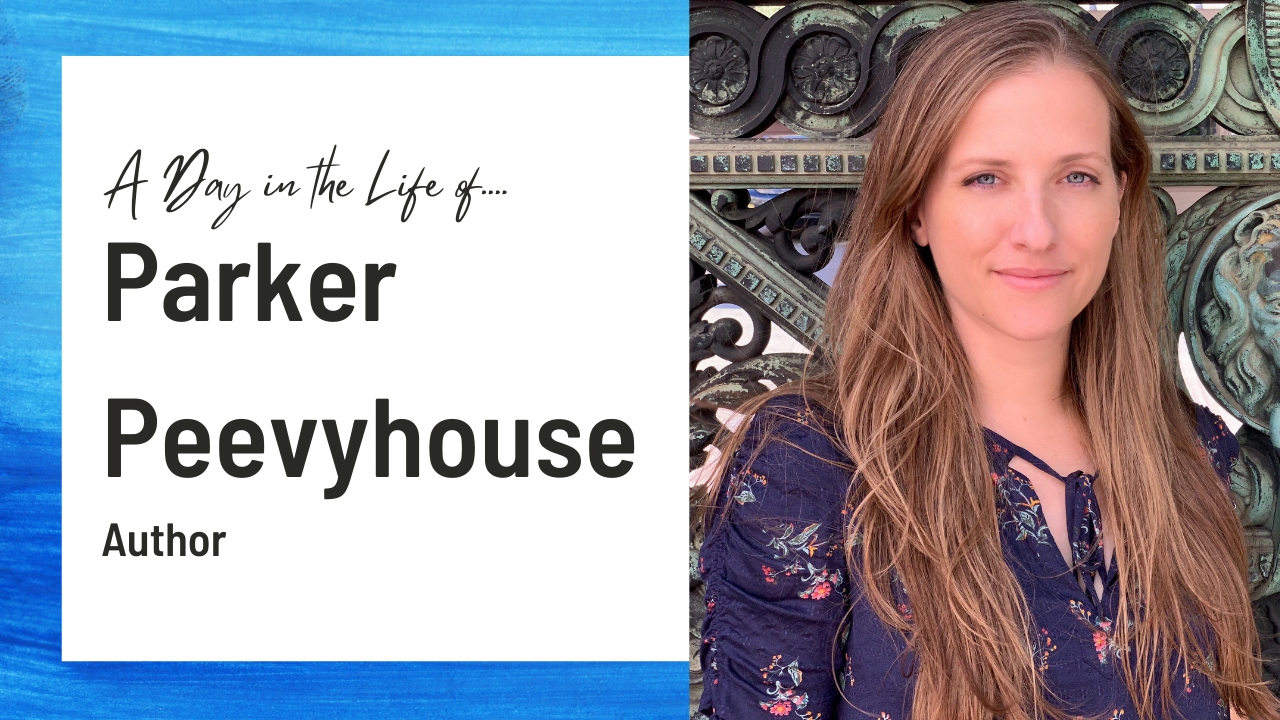
Parker Peevyhouse writes young-adult science fiction, the kind of puzzle-thriller where characters have to escape a room, or a world. She has three novels out, including Where Futures End with Penguin and the pair The Echo Room and Strange Exit. She also knew, from about the age of five, exactly what she wanted to do.
Her story is a useful corrective to the fantasy of the overnight book deal. Behind the finished covers is a decade of rejection, a borrowed wifi signal, a bike ride to a library, and a stubborn kind of self-belief she is refreshingly blunt about. This is the full picture: how she got published, what the work is really like, and the life behind the books.
She knew at five, and won her first contest at thirteen
Parker was writing stories almost before she can remember, making friends act out little plays and handing her sister stories as birthday presents. Two early wins told her what she was.
In fifth grade we had the young authors fair, like the science fair but you write a book. I wrote one about a boy who shrinks and goes on adventures, and it got a gold sticker. I thought, this is it, this is the life for me.
Parker Peevyhouse
At thirteen she won a national contest by finishing a story the Goosebumps author had started, capping it with the kind of twist ending she loved. It ran in a magazine, complete with illustrations.
How she actually got published
Wanting it early did not make it quick. In college she set herself a challenge: write a short story every month and try to publish it. She got zero of them published. So she talked a professor into an independent study built around writing a novel, and joined a college writers group for feedback. About a year after graduating, she landed her first book deal, on top of a great deal of rejection she does not gloss over.
I’m skimming over a lot of rejection. Rejection, rejection, rejection, then yes, published, then still more rejection and more publishing.
Parker Peevyhouse
She has a bracing theory about what it takes to keep going.
If you want to be an author, you have to be a little bit narcissistic. You have to believe the stuff you’re writing, everybody should read. If you’re not on board with that, the rejections get you to a place where you ask, why am I doing this?
Parker Peevyhouse
She balances that against a book she loves called The Scout Mindset, which argues that too rosy a picture actually makes goals harder to reach, because the first obstacle knocks the resilience out of you. She felt it in publishing itself: the moment the book is finally on the shelf, the idealized dream you have been carrying meets bad reviews and more hard work, and you have to hold both the love of the thing and its real costs at once.
How to get an agent and a book deal
For anyone trying to break in, Parker lays out the actual mechanics. Most writers land an agent by sending a query letter, a tantalizing flap-copy description of the book, to agents who are actively looking for that kind of story.
Her own road was a comedy of near-misses. She queried one agent, who passed her to a colleague at the same agency, who loved the manuscript. At the time, newly married and without steady work, she could not afford internet.
The only way I could get email was if my neighbor’s signal got strong enough to catch on my computer. I saw a preview from the agent saying she’d read my manuscript and would really like to, but I couldn’t open the email. So I got on my bike, pedaled to the library, signed on, and finally read it.
Parker Peevyhouse
That first agent lost her business and handed Parker to a colleague who turned out to be the wrong fit. She eventually signed with a third agent, who had found her short stories online and reached out. That agent sold Where Futures End to Penguin, and later sold The Echo Room and Strange Exit as a two-book deal to Tor Teen, after a Penguin editor passed on the time-loop premise of The Echo Room. She is candid that a two-book deal carries its own quiet stress, because the second book still has to be one the publisher wants.
What nobody tells you about publishing
The biggest surprise, Parker says, was a good one: the community.
I didn’t anticipate that publishing novels would lead to a whole community of writers. You already have so much in common. It doesn’t feel like competition. Someone who reads one book is probably going to read a lot of books.
Parker Peevyhouse
The other surprise is that promotion is relentless, and saying the same thing about your book over and over is draining. Her rule is to build promo she would genuinely enjoy. She once made a pop-up escape room based on The Echo Room. At a crowded literary festival, boxed into a corner behind a bestselling author’s enormous line, she handed the trapped crowd postcards with a QR code to her downloadable escape room, and turned a dead spot into a line of new readers.
Some of it is just making the best of whatever situation you’re in and having fun with it.
Parker Peevyhouse
A day in the life: mornings to write, afternoons to teach
Parker’s days have a clear shape. She writes from the morning into the early afternoon, then tutors high schoolers in English, which she loves and which pulls her out of her own head after hours of writing. Evenings are for family or for building the writing classes she teaches on her own website. She is a firm believer in a schedule over waiting for inspiration.
Someone asked why I’d have a schedule, shouldn’t I write when I’m inspired? That sounds great, and I’d finish a book in maybe ten years. You train your brain. If you sit at your desk certain days at certain times, it gets into a mode where it’s expected to put out ideas.
Parker Peevyhouse
Tellingly, her one day off is when the ideas flood in, as if her brain has saved them up. Tutoring teenagers does double duty, since she writes for that age and it keeps her close to how they actually think, lurching between childlike and startlingly insightful. During the pandemic, when writing slowed under the stress, teaching those classes became an unexpected creative outlet she now treasures. Writers eyeing their own path will find her rhythm echoes other guests who have made a real career of their craft, and any novelist today is also weighing where AI writing tools fit into the work.
The life behind the books: board games, tree photos, and a pen name with a purpose
Parker chose a gender-neutral pen name on purpose.
Sometimes people aren’t open to reading a science fiction novel by a woman. I wanted readers to get their impression from the book first, then look up the author if they wanted to.
Parker Peevyhouse
Outside the writing, she decompresses with board games, the more tactile, thinky, and puzzly the better, and with easy walks in nature. She is not the overnight-backpacking type. She would rather find a nice trail, see some cool trees, and take a picture of one, which she counts as a genuine hobby. She reads across every genre and describes her favorite kind of book simply as “anything weird.”
How she met her husband is its own small story. He invited her to a New Year’s Eve party right after college, she folded into his friend group, and when she finally worked up the nerve to tell him she just wanted to be friends, he mentioned he had had a terrible day, so she could not do it. Walking away, she realized she actually liked him. Around the same time she got into a fiction master’s program in England and chose to stay and keep dating him instead.
I’ve never regretted it, because now we’re married and it’s wonderful. And I’m still writing fiction.
Parker Peevyhouse
FAQ
A few common questions about getting published, answered from Parker’s own long road to a book deal.
How do you become a published author?
Write consistently, get feedback (a writers group or a mentor helps), then query literary agents with a strong letter about your book. An agent submits your manuscript to publishers. Expect a lot of rejection along the way; Parker got zero of her college short stories published before her first novel deal.
How do you get a literary agent?
Send a query letter, a tantalizing flap-copy description, to agents actively seeking your genre, and be ready for many passes. Parker’s first agent came through a referral from another agent at the same agency; her current agent found her short stories online.
How do you make time to write?
Parker writes on a schedule, mornings into early afternoon, rather than waiting for inspiration, because a routine trains your brain to produce ideas on cue. A true day off often generates the most ideas.
Is being an author a good career?
Parker loves the work and especially the community of writers, and is honest that it involves constant rejection, draining promotion, and long stretches of hard work even after a book reaches the shelf.
Final thoughts
What holds Parker’s story together is that the five-year-old handing her sister a homemade book and the published novelist biking to a library to read an agent’s email are the same person, still betting on her own weird ideas. She never needed permission to call herself a writer. She just kept writing until the world caught up, which is its own version of doing what you are meant to do.
If you have quietly wanted to make something for years, what would it take to give it a real schedule instead of waiting to feel ready? What is the first small thing you would write down?