A Day in the Life of a Marketing Director: Renee Cooper on Launching Pocket Lawyer, Running a One-Woman Marketing Department, and a Second Life in Cosplay
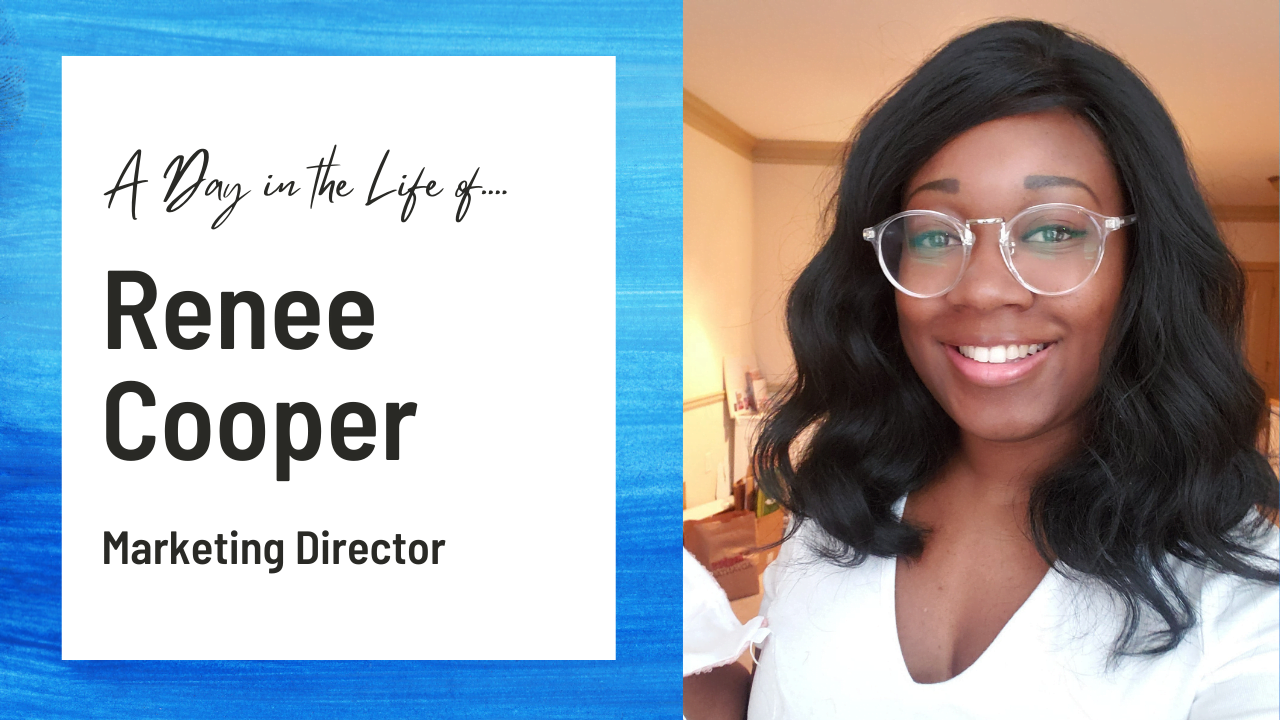
Renee Cooper is a marketing director who runs the entire marketing operation for a personal injury law firm in Atlanta, the Dixon Firm, as the only marketing person in the building. She has spent about ten years in the field, most of that time deep in social media, and this past May she stepped into her first full-time director role.
Here is the part the job title leaves out. On her own time she is the media relations director for MomoCon, an anime convention in Atlanta, the animation track director for Dragon Con, and the person who spent years running pop-up maid cafes out of a comic book store. Marketing pays the bills. Fandom is the rest of her, and the two feed each other more often than you would guess.
This is the full picture: what a marketing director actually does all day, how someone with a journalism degree and a first job at GameStop ends up there, and the very full life around the work.
What a marketing director actually does all day
At the firm, Renee owns every facet of marketing: digital, traditional, and everything in between. The goal is easy to say and hard to do: keep customers walking through the door. In a category as crowded as personal injury law, that means getting the firm recognized in the places where people will remember it later, on the day they finally need a lawyer.
Her first moves were content moves. She got the firm onto a podcast schedule, started an email newsletter to grow the list of past clients, and began writing blogs. The podcast is the piece she is proudest of.
It’s called the Pocket Lawyer podcast. I made up the name, I love alliteration.
Renee Cooper
Each episode runs fifteen minutes at most, built for a lunch break or a commute, and features her in conversation with the firm’s founding lawyer about a corner of the law most people never learn until they need it.
Because she is a department of one, a lot of the job is coordination. She briefed a graphic designer to rebuild the logo and lock in a color scheme and font, so she has a blueprint every time she makes a graphic. She replaced a pair of billboards on Camp Creek Parkway, worked with vendors on website edits, planned events, ordered merchandise, and built the budget to pay for all of it. It is the kind of many-threaded coordination you would recognize from a program manager, except the whole thread runs through one person.
Part of the craft is knowing that each platform wants a different version of the same message. LinkedIn is where the firm shows up as professionals, Instagram needs the copy rewritten because a viewer cannot tap a link in a caption, Facebook can carry more, and Twitter tends to ignore anything too polished. Once the brand’s look and voice are set, she says, tailoring the rest gets easier, and organic posts are worth reposting because they only live so long anyway.
How Renee became a marketing director
The path was anything but a straight line. Renee majored in journalism. Her first professional job, while she was still in school, was at GameStop. One of her college jobs put her behind the enormous moving cameras of a TV studio, and she interned at CNN, drawn to the production side, before deciding that around-the-clock hard news wasn’t for her.
What stuck from journalism was the writing, and specifically the discipline of it.
They say things like don’t bury the lead: what do you want people to get out of this? You only have so little time to capture someone’s attention, and that helps a lot.
Renee Cooper
Her first job in the field was at Apartment Finder, blogging, where the main requirement was simply that she could write. She learned to edit video on a Mac before she ever touched a PC, which taught her to move between systems and, eventually, to feel at home moving between social platforms as they kept changing. That first job ended when she was let go, and she went back to retail for a stretch. A recruiter then placed her at a small business in Stockbridge, where she did a little of everything: photographing products, running social, sending the weekly newsletter, and learning more about paid advertising than she ever had before. Agencies followed, then a role with the Fulton County Board of Health, and then the director’s chair. Anyone whose career took a few hard turns before it clicked will recognize the pattern.
How to become a marketing director
Renee is honest that the requirements have shifted. Ten years ago it was harder to know the path. Today a marketing degree helps, mostly because a good one teaches the digital side and the jargon that nobody explains on the job: what a campaign is, what ad spend means, why the platforms are built the way they are. She picked all of that up late, by spending real time inside ad platforms and testing ideas with small budgets.
Her real advice is about the reps. Any degree that puts you in front of a computer and lets you experiment will help, as long as you pair it with creativity and a knack for telling a story. The marketers who get good at this play in the tools, test with small money, and learn what a click actually costs. That experiment-and-measure instinct is the same one that drives a product manager, pointed at audiences instead of features.
The best and hardest parts
The best part, by her own account, is the range. A director touches everything, and Renee likes it that way. She also loves the systems she has built to hold it all together, which is a genuine turn for someone who says she has not always been an organized person. She learned her toolkit partly through convention planning, and Airtable is the centerpiece.
Airtable is like Excel on crack, in a good way. It’s like a magical Excel, that’s probably a much better way of putting it.
Renee Cooper
She runs her budgets, her content, and her vendor follow-ups out of it, and rounds out the stack with Canva for design and social schedulers when a posting push calls for them. One of the firm’s billboards started as a Canva file she blew up to the largest ratio she could before handing it to the billboard company to finish at full size.
The hardest part is the flip side of the range. There is no one else in the marketing seat, so every touchpoint runs through her, and the role asks her to be a confident advocate for the business at all times, including the moment she says the firm’s name out loud and stands behind it. Being a department of one means the wins and the gaps both have her name on them.
Is marketing director a good career? Renee’s honest take
A few months in, Renee calls the work fulfilling, and her optimism is grounded in results she can already see: more recognition, more phone calls, a brand taking shape. Her broader take on marketing is generous, because she has spent years advising people on how to market whatever they have started.
Her first piece of advice is to build a content engine, and a podcast is a good one, since a single recording becomes a YouTube video, short clips, audio, text graphics, and a blog post. She tells people to think month by month rather than every single day, to build each month around one campaign, and to always give the audience a clear next step, whether that is an email signup, a form, or a simple line telling them how to reach out. She has a real fondness for forms and free tools, and she is candid that offering free consulting worked so well it pulled her back into professional mode. That mix of hands-on help and paid guidance is familiar territory for a marketing consultant.
The part people miss, she says, is the physical world. Stickers, pens, and shirts still work, local influencers can be worth more than a paid ad because their audience is already aligned, and a hundred dollars of thoughtful giveaways can outperform a hundred dollars of clicks. Her rule of thumb is a philosophy as much as a tactic: always be marketing, and always be your own advocate.
The life around the work
The fandom half of Renee’s life is a second career that happens to run on the same skills. She came into convention work as press, back when she and her friends ran a YouTube channel covering anime and comics, and that coverage turned into managing media relations for MomoCon and directing the animation track at Dragon Con. In 2018 she went to eleven conventions; these days she is more selective, and she puts the same planning muscle into a Dragon Con schedule that she puts into a marketing calendar.
Then there are the maid cafes. A maid cafe is a Japanese concept, a wholesome, costumed cafe where hosts in frilly Lolita-style outfits serve cute food and drinks and put on small performances. In 2015, rather than wait a year for a convention to host one, Renee built her own pop-up in the back room of a friend’s comic book store, hot cocoa themed, with toppings and songs and a group of friends in costume. It grew from there, at one point taking over a cleared-out storefront at a local mall with her roommate.
It’s a bizarre, overly cute space to be in. And it’s an experience.
Renee Cooper
What she took from running them was a lesson in hospitality: how to build a space where people of every age felt comfortable enough to sit down, play a board game, and talk about their favorite shows. The craft carried over. The same eye for a memorable experience shows up when she talks about a good convention panel, the kind of world-building that a narrative designer would nod at.
Her cosplay is strategic now. Instead of a closet full of new builds, she picks one character she loves and invests in it, sourcing pieces from Poshmark, Amazon, and specialty makers rather than sewing everything from scratch. One of her favorite finds was a 1990s wedding dress she bought for twenty dollars and turned into a wedding-themed Garnet costume. Her closing advice on a budget is the same principle she brings to the maid cafe and the marketing floor: lashes and nails always make a costume look great, because putting your best face forward is its own kind of marketing.
FAQ
A few of the questions people ask most about becoming a marketing director, answered from Renee’s own path.
What does a marketing director actually do?
At a small organization, everything. Renee handles digital and traditional marketing, content, the podcast and newsletter, branding, billboards, events, merchandise, vendor management, and the budget, often as the only marketing person on staff.
Do you need a degree to become a marketing director?
It helps, though a degree is optional. A marketing degree teaches the digital tools and the industry jargon, and Renee built her career on a journalism degree plus years of hands-on testing inside ad platforms with small budgets.
How do you market a small business with almost no team?
Build a content engine like a podcast that turns one recording into many posts, plan month by month around a single campaign, invest in the physical world with giveaways and local influencers, and always give people a clear next step.
What tools does a solo marketer actually use?
Renee runs most of her work out of Airtable for budgets, content, and vendor tracking, uses Canva for design, and reaches for social schedulers when a posting push calls for them.
Is marketing a good career?
Renee finds it fulfilling and full of variety, with real results she can point to. The trade is that a solo director wears every hat, so the pressure and the ownership both sit with one person.
Final thoughts
The thread running through Renee’s story is that she kept following the work that held her attention, from a TV studio to a blog to a billboard to a maid cafe, and let each skill carry into the next. She did not wait for permission to build a podcast, a cafe, or a career; she made the thing and figured out the rest.
If the skills you use for fun turn out to be the same ones that could pay your bills, what would it look like to stop keeping them in separate boxes?