A Day in the Life of a Nurse: Tyler on Long-Term Care, the Road Into Nursing, and Small Steps to a Healthier Life
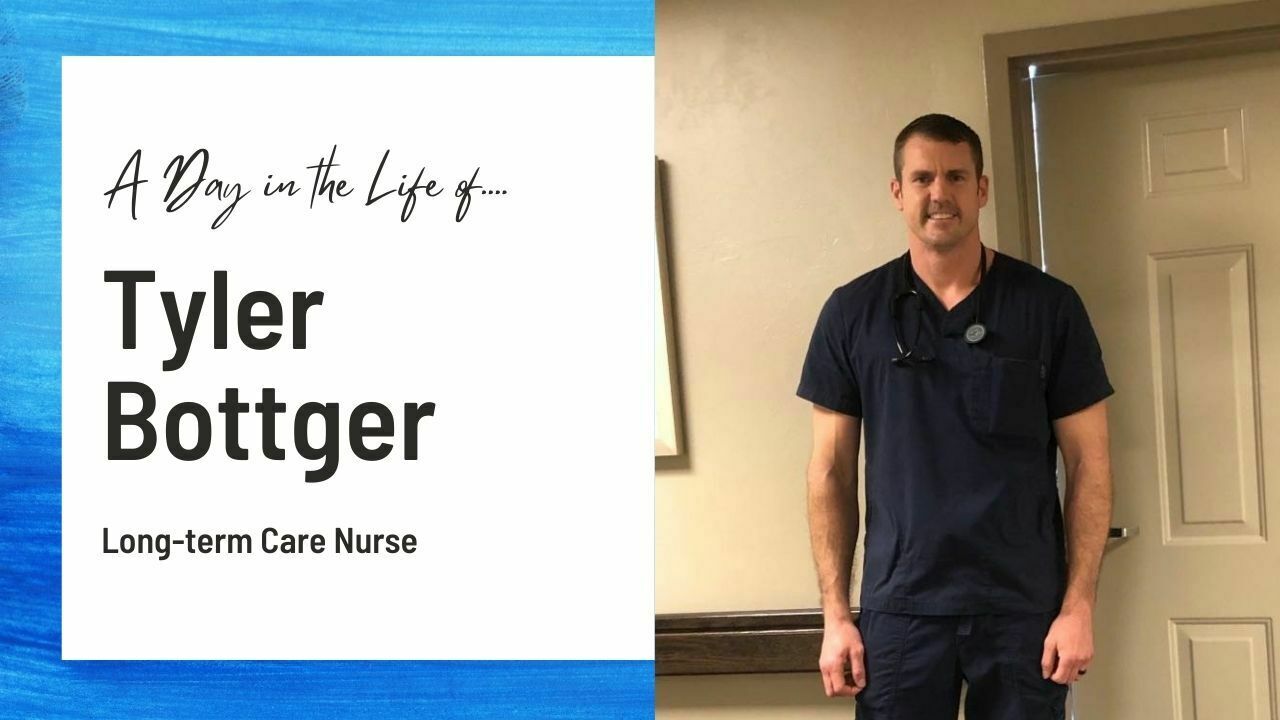
Tyler is a long-term care nurse in a skilled nursing facility, and his route there ran through an oil field, a motorcycle shop, and an EMT license. He is also, these days, a student of holistic health, which makes his story as much about how he lives as how he works.
His path is proof that a career can be built in small steps rather than one clean leap. This is the full picture: the work of nursing, how he got into it, and the changes he has made in his own life along the way.
What a long-term care nurse actually does
Tyler works mainly weekends on the skilled side of a nursing home, caring for people rehabbing after surgery alongside longer-term residents. The clinical list is long: IV management, medications, assessments, labs, mobile x-rays, and emergency care when a fall or a code happens overnight with no doctor on site. But he is clear about what matters most.
I feel like half of what we do is providing security, letting them know it’s okay, treating them like a person and having a real conversation, even if it means I stay an hour late to catch up on charting. That’s what makes me lay down at night knowing I did the best I could.
Tyler
He also treasures the residents themselves.
Not many people get to talk to a 105-year-old about the Great Depression. She said she was in her thirties then, and I thought, wow, I’ve still got some life to live. It puts things in perspective.
Tyler
The winding road from roughneck to nurse
Tyler did not start in healthcare. He worked the oil field out of high school, ran a motorcycle shop, and got an EMT license out of curiosity, which pulled him toward medicine. After a layoff, he enrolled in a competitive vocational program for licensed practical nursing, where they took sixteen of eighty applicants.
It’s kind of an unconventional way, going from roughneck to nurse, but it’s been fun.
Tyler
He is now in school for his RN, and his advice reflects how he got here. Do it in stages.
I recommend the LPN first because it’s shorter and cheaper, and you can work a while and find out, do I want to do this, before you dump more time and money into the RN. Just be sure what you’re getting yourself into.
Tyler
It is a real-world example of changing careers one deliberate move at a time, the same instinct that shows up across fields, including healthcare roles like pharmacy.
The hard truths of nursing right now
Tyler does not sugarcoat the state of the work.
I always tell people, don’t get into this field and expect an easy day, because there isn’t one. Some days are easier than others, but there are no easy days. Nursing home work is very fast paced.
Tyler
Staffing is the biggest strain, worsened by turnover and by nurses moving to higher-paying agency contracts, and he is quick to say the aides are underpaid for how hard they work. He would like to see grants or bonuses that reward the people who genuinely show up to care.
Small steps to a healthier life
The second half of Tyler’s story is where it gets unusually on-brand. Working around dementia, and watching it in his own grandparents, sent him looking for causes and prevention, which led him to holistic health and eventually to the coaching class where this conversation began.
Some doctors are calling dementia type-three diabetes. The deeper I go, I keep finding the same things: food, water, sleep, stress. I’m trying to figure out how to prevent that for me and the people I love.
Tyler
The changes came, fittingly, in small steps. He started turning his wifi off at night and noticed his sleep deepen. He took up meditation, sometimes with his wife, sometimes alone, and got curious about the difference between working out and “working in,” the energy-building breathwork and movement that he says he could physically feel for the first time in that class. It is the same idea behind so much of raising your own energy: tend to yourself first.
You can’t be the best you for anybody else if you’re empty. People think that’s selfish. It’s actually the opposite.
Tyler
A recovery, in his own words
Tyler chose to share the foundation under all of it, because he wants it to help someone. He is a recovering alcoholic, three years sober, and he speaks about it plainly.
I’ve learned that anybody can change if they really want to, but you probably can’t do it alone. I never gave up. Quitting alcohol was the first step to the rest of my life. I owe it to a lot of people who prayed for me and answered the phone.
Tyler
He credits twelve-step programs and a sponsor who still knew his name after two years of silence, and he is careful to add that no one should quit a serious addiction abruptly without medical help. Six months after the alcohol, he quit smoking too, on the confidence that he could. Three years on, he is planning a small podcast about sobriety, because opening up, he says, is its own form of healing.
The life around the work
To decompress, Tyler heads outside: the gym, walking his dogs in the country, lying in a hammock to breathe. He loves to travel, recently summiting Wheeler Peak in New Mexico, and is looking forward to a trip to his wife’s home country. He and his wife watch a movie together most weeks, and he only wishes they were better at picking good ones.
FAQ
A few questions people ask most about a career in nursing, answered from Tyler’s own path.
How do you become a nurse?
Many nurses start as a licensed practical nurse (LPN) through a vocational program, then bridge to a registered nurse (RN) degree. Tyler recommends the LPN route first because it is shorter and cheaper and lets you test whether the work fits before committing to a longer program.
What does a long-term care nurse do?
Manage medications and IVs, run assessments and labs, coordinate with doctors and families, supervise aides, and handle emergencies like falls or codes, often with limited on-site support on nights and weekends. Much of the real work is comfort and communication.
Is nursing a good career?
Tyler finds it deeply meaningful and is honest that there are no easy days, that staffing shortages are real, and that the pace is demanding, especially in a nursing home.
How can you take care of yourself in a demanding job?
Tyler’s answer is small steps: better sleep (including unplugging at night), movement, meditation, and taking care of yourself first so you have something left to give others.
Final thoughts
The thread in Tyler’s story is right there in the original title: small steps. He built a nursing career one stage at a time, rebuilt his health one habit at a time, and rebuilt his life one sober day at a time. None of it was a single dramatic leap. It was the quiet, repeated decision to keep going and to take care of himself so he could take care of everyone else.
Where in your own life have you been waiting for one big leap when a small step would do? What is the first small step you could take this week?