A Day in the Life of a Veterinarian: Nicole Alleva on Vet School, Specializing in Neurology, and the Reality of the Job
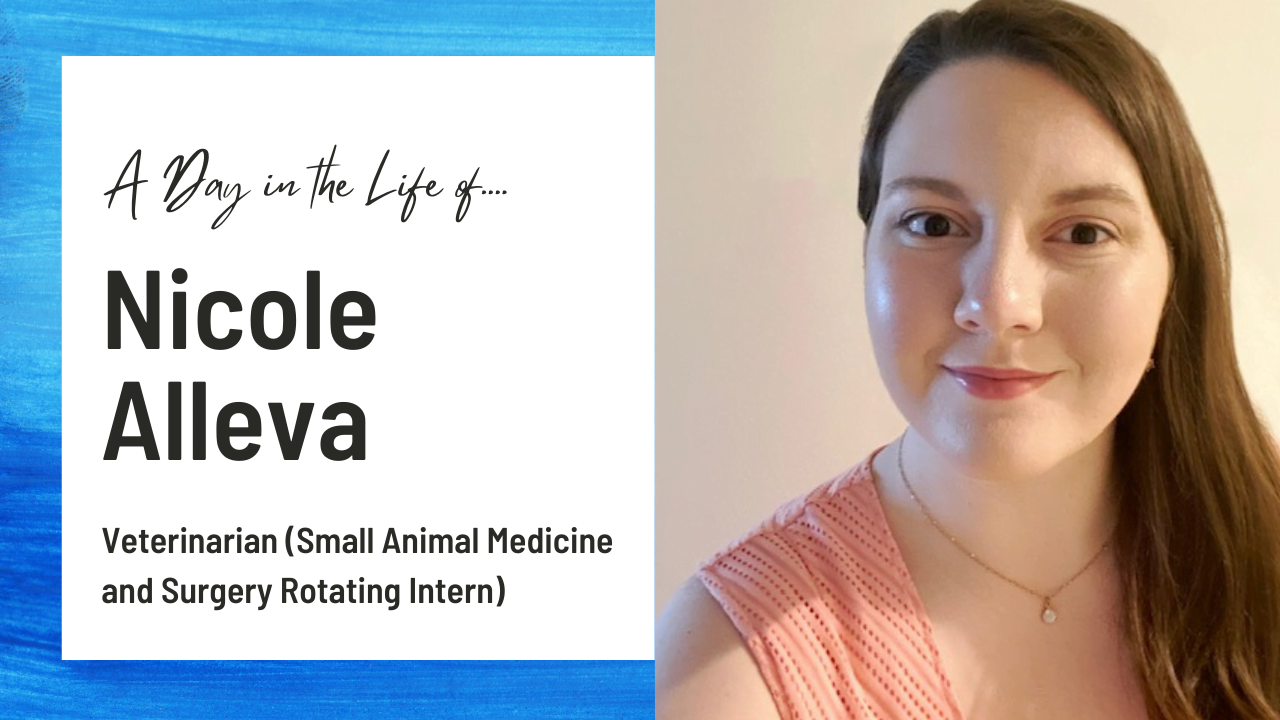
Nicole Alleva is a veterinarian, a small-animal rotating intern at the University of Georgia and, in her own cheerful phrase, a “baby doctor” who graduated vet school just this past May. She is spending an extra year in training because she wants to go deeper than most: into veterinary neurology.
Her story is a good look at what the job actually asks of you, bites and scratches and hard decisions included, and how someone gets there. This is the full picture: the work, the path, and the life around it.
What a veterinarian actually does all day
As a rotating intern, Nicole moves through every specialty service in the hospital, carrying primary responsibility for cases and, already, teaching students. A big part of the skill is detective work, because the patient cannot explain what is wrong.
Our patients can’t tell us what’s going on. Something like vomiting has an extremely long differential list, from kidney disease to a foreign body, because dogs like to eat things they shouldn’t. So you really rely on history and a detailed physical exam to figure out your plan.
Nicole Alleva
She is also, in effect, several professionals at once, which is exactly why she chose it.
As a veterinarian I’m also a pharmacist, the therapist for the client, a teacher, a leader. It’s a job that encompasses a lot of other jobs. You wear a lot of hats.
Nicole Alleva
Why she switched from pharmacy to veterinary medicine
Here is the twist: Nicole did not always know. She started college pre-pharmacy, drawn by the shorter path and steady hours, with veterinary medicine only a back-of-the-mind idea her dad kept nudging. Then she started shadowing at a local vet her sophomore year and fell for it.
That sophomore year was when I decided this is what I want to do. Then I had that moment of panic, like, I’m really far behind all those people who’ve wanted this their whole life.
Nicole Alleva
Luckily her pre-pharmacy prerequisites overlapped, but she scrambled to make up animal-experience hours, working Saturday mornings at an animal hospital. Anyone whose plan changed midstream will recognize her pivot from pharmacy and the general shape of changing direction on purpose.
How to become a veterinarian
Nicole laid out the real requirements, and they are substantial. Vet schools expect prerequisite coursework (biology, chemistry, organic chemistry, and sometimes genetics, anatomy, or nutrition), a large number of animal-experience hours, strong grades, extracurriculars, and letters of recommendation from professors and veterinarians. To go further into a specialty, the bar stays high through internship and residency.
Her own specialty is veterinary neurology, treating neurologic conditions in animals.
Neurologists handle things like herniated discs, common in dachshunds, and they do brain surgery. I’ve seen two craniotomies. My special interest is seizure disorders, idiopathic epilepsy and congenital brain diseases.
Nicole Alleva
She is also passionate about the parts of the job people rarely picture: nutrition and rehabilitation, including underwater treadmill therapy for arthritic pets, with a smear of peanut butter on the glass for motivation. Her care for animals sits alongside other guests in health and communication, like a pediatric speech pathologist.
The hard parts: bites, and the weight of euthanasia
The blog’s original title said it: bites, scratches, and rabies, all in a day’s work. Nicole is candid that it is a dangerous profession, though good protocols and skilled technicians keep most days safe. She is more likely to feel frustrated with people than with animals, especially the ones who wait six months and then arrive at five o’clock on a Friday.
The heaviest part is one vet school cannot fully prepare you for.
A big part of our job is euthanasia, and that’s not something I’d done before graduating. What I’ve learned is my own comfort level, and that I can say no if I don’t agree. It’s sad, but clients are so grateful. Doing a euthanasia and then seeing a puppy the next visit can be emotionally taxing.
Nicole Alleva
To decompress she tries to turn her brain off after work, stays present with her husband and pets, and rides what she calls her “felitons,” the fake Peloton spin bike she bought with a stimulus check.
The weirdest case, and a real day in the life
Ask Nicole the strangest thing she has seen and she has a fresh one.
A GDV is when a dog’s stomach flips and fills with gas, common in big breeds. I had a case of it in a guinea pig, which is super rare. We took the guinea pig to surgery to de-rotate the stomach and tack it down so it won’t flip again.
Nicole Alleva
A real day depends on the service. Overnight ER means arriving at 7 p.m., seeing emergencies with students until midnight, then holding down the entire ER and hospital alone until 7 a.m., followed by intern rounds at eight. Regular rotations start around seven with patient checks, rounds, and cases. As an intern, she says, sixty to seventy hours a week is normal.
The life around the work
Off the clock, Nicole and her husband are big on hiking, usually capped with a brewery and live music, the thing they most like to do when they are both off. They married recently, after a long engagement, in a small hometown ceremony they pulled together when the pandemic pushed the big celebration to the next year, convincing her father-in-law to get licensed to officiate. They moved to Georgia for her job, their cats love the stairs in their rented house, and she has made peace with eating a lot of Chick-fil-A to make up for lost time up north.
She will also tell you her favorite animal is the beluga whale, and that her small secret is a real love of baking and cooking, lately aimed at desserts for her veterinary students.
FAQ
A few of the questions people ask most about becoming a veterinarian, answered from Nicole’s own path.
How do you become a veterinarian?
Complete prerequisite coursework (biology, chemistry, organic chemistry, and sometimes genetics, anatomy, or nutrition), accumulate substantial animal-experience hours, and earn strong grades, extracurriculars, and letters of recommendation, then finish veterinary school. Specializing adds a rotating internship and a residency.
What does a veterinarian do all day?
Diagnose patients who cannot describe their symptoms using history and physical exams, run diagnostics, perform treatments and surgeries, counsel clients on diet and care, and, in a teaching hospital, instruct students. Days vary widely by service, from routine rotations to overnight emergency shifts.
Do you have to know early that you want to be a vet?
It helps, because of the prerequisites and animal-experience hours, but Nicole started pre-pharmacy and switched sophomore year after shadowing, then caught up on the requirements.
Is being a veterinarian a good career?
Nicole loves the variety and the many roles the job combines. She is honest that it is physically risky, emotionally heavy (especially euthanasia), and demanding, with sixty-to-seventy-hour weeks common in training.
Final thoughts
The thread in Nicole’s story is that she followed the work that kept surprising her. She traded a tidy, predictable pharmacy path for a job that makes her a doctor, pharmacist, counselor, teacher, and detective all at once, and that occasionally sends a guinea pig to surgery. She did not have it all mapped out at three years old. She paid attention, felt the pull while shadowing, and did the unglamorous work of catching up.
If a single afternoon of shadowing could redirect your whole career, what would you want to go watch someone do? What has quietly been tugging at your attention?