

I’m done filtering myself
I learned something about myself recently, and it’s been sitting with me since.
When I was young, I was taught to rehearse what I said before I said it. In my head, I would run each sentence through first, checking it, softening it, making sure it would land gently and wouldn’t bother anyone. Then I would say the edited version.
It became so automatic that I stopped noticing I was doing it. For most of my life, I’ve been speaking the second or third (or fourth or fifth!) draft of my own thoughts.
The habit I learned early
On the surface, it looks like consideration and care.
Underneath, it was something else. I had made myself responsible for how everyone around me would feel about my words. Before I spoke, I was already managing their reaction, already bracing in case the honest version of what I thought landed wrong.
That’s a lot to carry into every conversation. It’s also a way of deciding that your real thoughts are a little too much and that they need trimming before they’re safe to share.
I’m responsible for my feelings alone
Here’s the truth I finally landed on. I am responsible for my feelings. Other people are responsible for theirs.
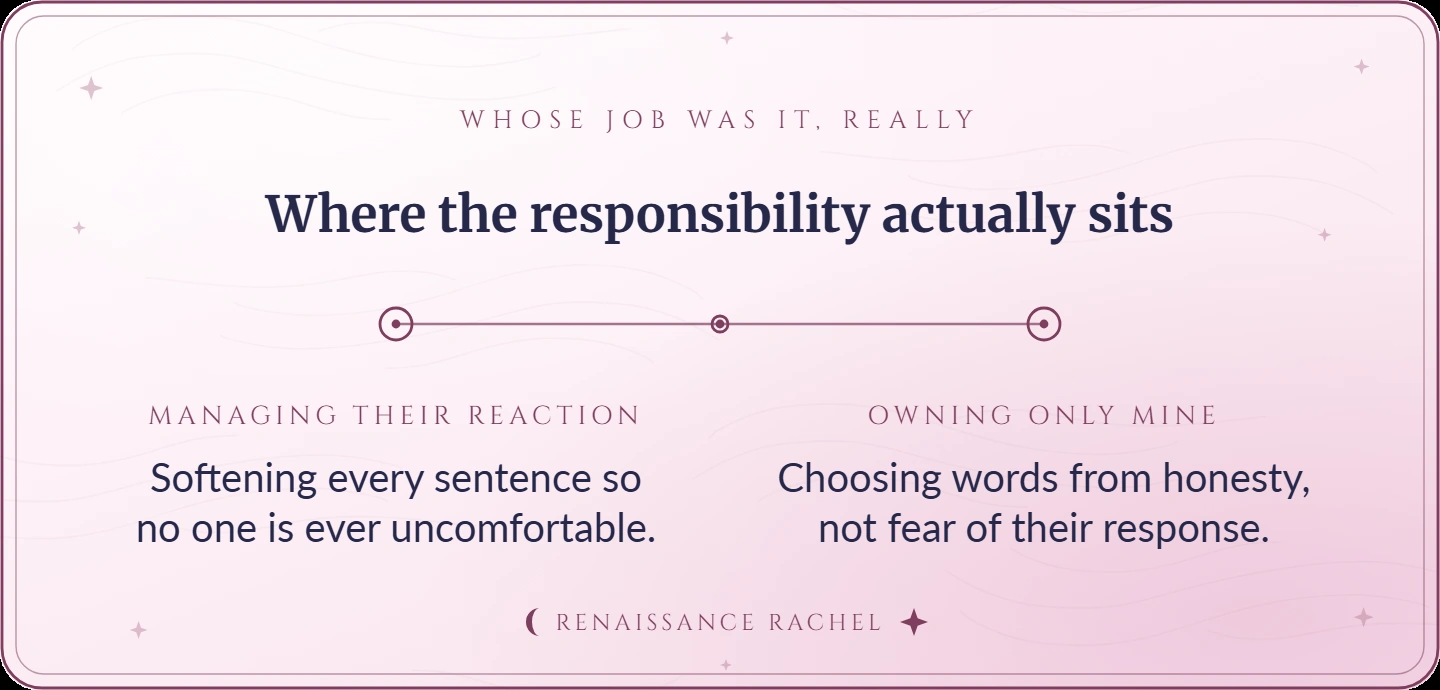
I control how I respond. They control how they respond. When I soften every sentence so no one is ever uncomfortable, I’m not protecting them. I’m taking on a job that was always theirs and making myself smaller to do it.
This is different from carelessness with people. I still choose my words with care. I choose them from honesty and no longer from the fear of someone else’s reaction.
Where I stop filtering
Renaissance Rachel is where I put this into practice. This is where I show up as myself and say what I actually think.
For a long time, the fear of unsubscribes shaped what I let myself write. I’d wonder who might be annoyed, who might leave, and I’d sand the edges off a piece before anyone had even read it. I’m finished doing that.
If people leave, they leave. I desire to be respectful, kind, and open, and I invite real dialogue. I’m glad to hold a hard tension in the room with someone rather than smoothing it over so we can both pretend to agree. I choose to stay fully myself, even when that’s uncomfortable for someone.

Final thoughts
Most of us learned some version of this. Rehearse it, soften it, make sure it won’t cost you anyone’s approval, then speak.
I’m choosing the unedited version now. The people who are meant to be here can meet the real me, edges and all. The ones who need me smaller can find that somewhere else.
So here’s what I’ll leave you with. Where are you still speaking the second draft? And what would change if you trusted the people around you to handle the first?