
When the ground moves under your work
A few years ago, the ground moved under my blog.
I had built real traffic by writing to search, and for a while it worked beautifully. Then Google changed how it ranked things, shifting toward what it called helpful content. My posts slid down the results while the big sites like Forbes rose above me. Traffic I had counted on thinned out.
I could have spent a long time angry about that. For a little while, I was. Then I looked at it plainly and thought, okay, this is how it is now. I got to adapt. I got to focus down on what I truly desired this blog to look like.
The story we tell about how it used to be
When something we relied on changes, the first story we reach for is usually that it used to be better.
Writers do this with the old publishing world. I used to be able to submit a book and land a deal, the story goes. But how many people ever actually got that deal? It was rare. Plenty of writers we now call great went unrecognized while they lived, some of them discovered long after they were gone.
So “it used to be easier” is a shaky foundation to build a grievance on. Often the past we miss was a more closed one. Fewer doors, open to fewer people, on terms most of us never got to touch.

When the ground moves under you
I read a newsletter from a writer I follow who is living through her own version of this. Years ago, with only a few books out, she earned more than she does now with a whole catalog of them. The platform she sells through changed its rules. More writers arrived. The math that once worked stopped working.
I feel for her, because I know that exact drop. When something you built is suddenly worth less through no change in your own effort, it stings. It is a real loss, and it deserves to be felt.
What I notice, though, is where the story tends to go from there. It becomes a story about what the platform, the algorithm, the technology did to her. Underneath it sits a belief that the old way was the right way, and everything since is a kind of theft.
There is comfort in that story, and the comfort is the trap. Sympathy feels like support, and sometimes it is. It can also become a place to stay stuck, a way of settling into being the person things happen to. The most useful thing I can offer myself in that moment is the reminder that I get to choose what comes next.

What are you actually building?
Here’s the question I’ve learned to ask when the ground moves. What am I actually building, and does it depend on something I don’t control?
That question is more useful than the one we usually reach for, which is how to get back to the way it worked before. When you tie your worth as a creator to a payout structure, an algorithm, or a platform’s rules, you hand that worth to something that was never built to protect it. Those systems keep changing, on their own schedule, for their own reasons. If your sense of yourself rises and falls with them, you’ll spend your days reacting to decisions made in rooms you’re not in.
There’s another cost too, in measuring the work by what it pays. Expecting your passion to earn for you can drain the very thing that made it a passion. The work starts bending toward a number instead of toward you. So the freeing question underneath all of it is simple. What is my real goal here? If the answer is to keep making the thing I love, most of what changed matters less.
Final thoughts
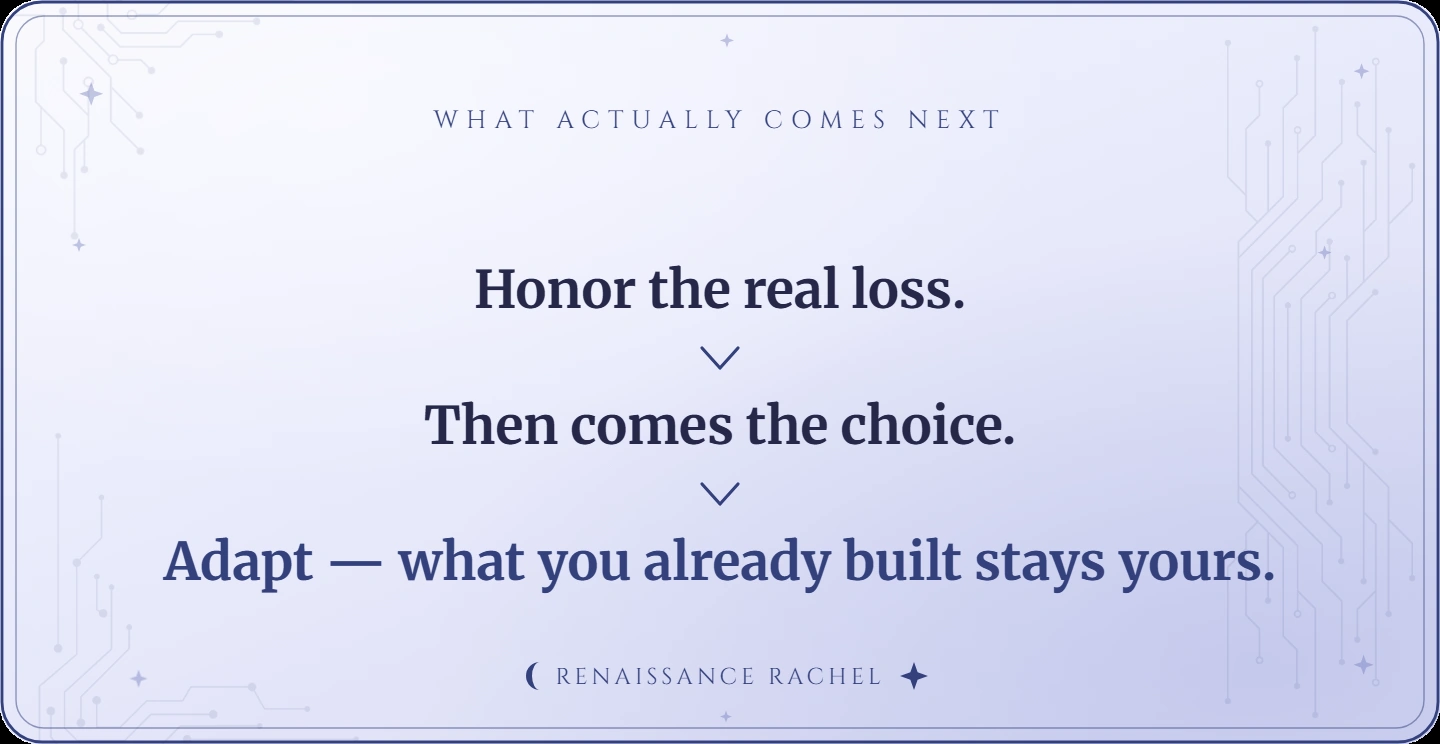
When the ground moves under your work, and it will, the loss is real and worth honoring. Then comes the choice.
You get to adapt. Adapting is how you keep creating in a world that keeps changing. It’s you, still here, still making.
And everything you’ve already made is still real. The books or whatever it is, the years of work, all of it built with your own hands, stays exactly what it is, no matter how a platform recalculated its math this quarter. That was yours. It stays yours.
So what might you build next, on ground that belongs to you?