
Yesteryear Review: The Question This Book Refused to Ask
I stayed up until 1 am finishing Yesteryear by Caro Claire Burke. The first night I started the book, I felt the thrill of excitement I feel when I start reading a book that excites me. The other nights I continued to read, I felt puzzled and also unable to stop reading. The night I finished, I had to know what happened. And when I did, I felt confused. And mad.
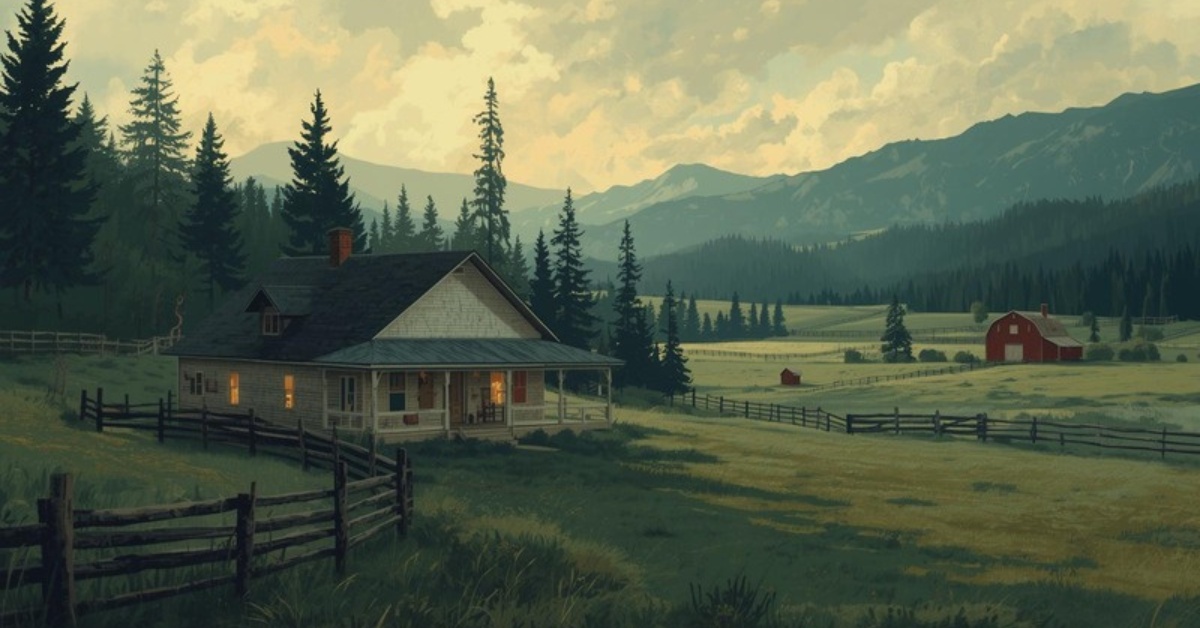
I found this book because I saw on Instagram that Anne Hathaway had acquired the movie rights and planned to star in it. The premise drew me in immediately: a tradwife influencer wakes up in 1855 and is forced to genuinely live the pioneer life she’d been displaying online. As someone who believes there’s a lot we can learn from the past without completely abandoning it, I was curious to see how an author might portray that life through the eyes of a modern woman.
What Burke gets right
Caro Claire Burke can write. Yesteryear is compelling enough that I read it across several nights and couldn’t put it down. She plants subtle details that reward attention. At one point, Natalie’s son mentions that the horse isn’t for riding. I read that and thought, am I missing something about history? Did farmers only use horses for work? It wasn’t until after I finished that I realized there was no mention of the horse doing any work either. Burke can do subtle. There were several moments like that in the book, things you can pick back up on with a reread or just thinking about it later.
Burke identifies something real about tradwife culture. There is tension in women who advocate traditional homemaking while building social media businesses around it. But I think this got oversimplified in the discourse. These women aren’t necessarily being hypocritical. Many of them are building a business that lets them stay home with their kids and contribute to the family without a 9-to-5. The way things are going, it’s harder and harder to live off one income. That’s not pure contradiction. It might be a necessary adaptation. Burke sees the tension and stops there. She doesn’t ask why it exists.
The cultural critique I expected. What I didn’t expect was for the central promise of Yesteryear — a modern woman actually forced to live in the past — to never arrive. And it doesn’t. That’s where I got angry.
What the book actually delivers — Spoilers ahead
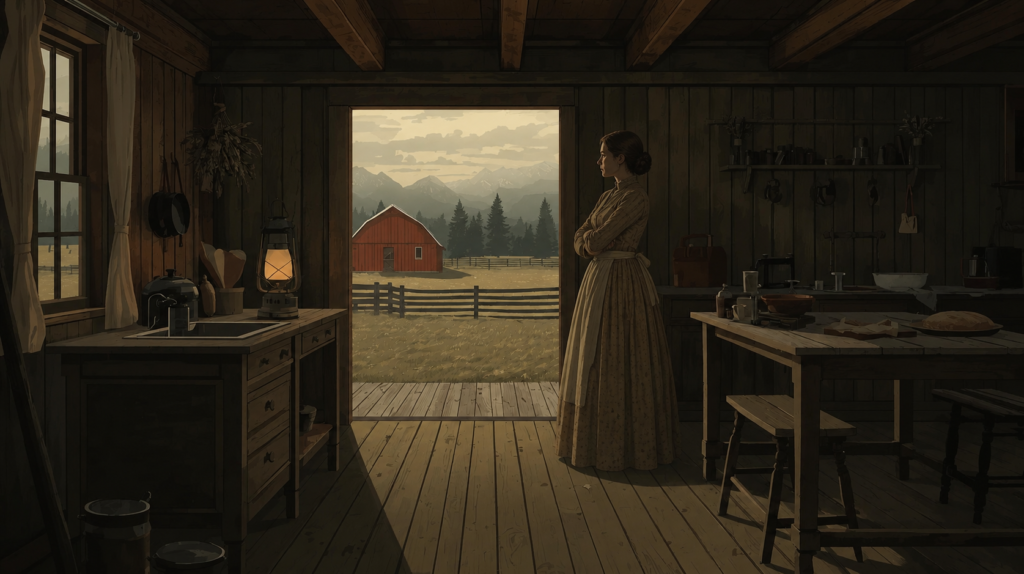
There is no time travel. Natalie and her husband Caleb chose to go off-grid and remove all modern technology from their lives. The “1855” setting is a shared delusion that eventually becomes Natalie’s psychosis. I kept reading the book expecting to figure out what the time travel mechanism was. I got suspicious during the book that it was instead some kind of psychosis or coma. And it was.
Only about a third of the book is even set “in the past.” The rest is flashbacks to Natalie’s modern life. The flashbacks work early on because you assume they’re building context for the 1855 experience you’re waiting for. You invest in her backstory because you think it’s going to pay off when the historical premise finally kicks in. It never does. The flashbacks aren’t supporting the real story. They are the story. The 1855 setting is the lure, instead of the actual story.
Because Natalie and Caleb were never in the past, the historical life didn’t need to be historically accurate. I’d hoped to see how an author might write about the 1800s from the perspective of a modern woman, and to an extent I did get that. But the book reveals that they know nothing about farming, cannot survive without outside help, and are essentially playing at 1800s life. The leap from “we need to disappear after a scandal” to “let’s pretend it’s 1855” is never earned. They needed to go underground, yes. But to eliminate all forms of modern convenience and pretend it’s 1855? That decision is never justified and never explained.
And then the life she chose destroys her. Which is fair. It would be brutal. Except that the book never gives her a single moment of genuine discovery. Life in the 1800s was simpler. Natalie could have found that she enjoyed a simpler life without the social media that ultimately destroyed her. She could have developed a closer relationship to nature and the animals. She could have learned something real about self-sufficiency, about presence, about what it means to live without constant distraction. Instead, she hated every minute.
Most of the book is relentlessly negative about both men and women. Natalie’s interiority fixates on how everyone is fake and lies to her. That negativity keeps running until her mental breakdown. Her sister, her mother, and her children all have an experience of expanding their worldview. Natalie never does. She believes in the values of being subservient to her husband and having as many babies as possible. She resents and hates all of it. She had many chances to claim her power and she never did.
The book left me less with questions about Natalie and more with questions about her author. I felt as if Burke hated her own main character. I knew next to nothing about her before reading the book — I usually don’t research authors beforehand — but after finishing, I needed to know WHY.
What I found: Burke is a former editor at Katie Couric Media with an MFA from Bennington. She co-hosts a politics and culture podcast. She found tradwife content on TikTok, admitted she found it intoxicating, said she still can’t look away. And then she wrote a book proving that the pull is dangerous instead of asking what the pull is actually for.
She stopped researching religion partway through because she decided the denominations were all the same in how they treat women. She came into this book with a verdict already written. She’s not a bad author. Her writing is excellent and compelling. She didn’t do the inner work to deliver the narrative she promised.
And honestly? I was more surprised by who I ended up disappointed in.
I’d never heard of Caro Claire Burke before. When I finished Yesteryear, the disappointment landed on Anne Hathaway. It made me realize how much I still admired and respected her. Ever since The Princess Diaries, I’d looked up to her. So when she so heavily endorses a book like this, it makes me question the version of Anne that I’ve constructed.
Ultimately, my disappointment in Anne Hathaway is really just a symptom of my disappointment in the book. And my disappointment in the book comes down to one thing.
The question Burke refused to ask
The question Yesteryear should have asked and blatantly avoided: What is worth reclaiming from the past?
The past holds a lot of wisdom for us. People ate real food. They took the time to make meals themselves. They grew their food, raised their animals, processed them by hand. Food had meaning. They lived off the land. They were self-sufficient. Without the distractions of modern times, people were present with each other. Life was brutal and they also had different cares than we do. Not necessarily better or worse. Different.
Natalie never got to discover any of that. Burke never let her.
The us vs. them narrative is what keeps us divided. Not being able to understand the other side. Hating your character so much that you refuse to let her find a single thing worth keeping. Burke got triggered by the tradwife movement on TikTok and decided to go on the offensive without taking the time to understand what the longing underneath it is actually for.
Yesteryear could have been an honest inquiry. Instead it was a prosecution. And we have enough of those.