
AI Foundations: How AI Works, in Plain Words
How does AI actually work? This free course explains it in plain words, with everyday examples. No coding and no math.
Watch in order, since each lesson builds on the one before. Every lesson comes with a one-page recap PDF with more practice scenarios.
By the end, you’ll know what’s happening when you type into ChatGPT, Claude, or Gemini, so how you use it becomes your choice.
Are you using AI consciously, or is it using you?
Watch the course playlist on YouTube
Who it’s for
It’s for beginners and people new to AI as well as for longtime users who want to go deeper or revisit the fundamentals.
The lessons
The one-page recap PDF for each lesson is attached to its YouTube video.
-
 Lesson 1
What is generative AI? How it grew from the AI you already use
Generative AI is the newest layer of the AI you’ve used for years: autocorrect, your spam filter, the show your streaming service picks next. In this lesson, you’ll see how it grew out of machine learning and why one shift lets anyone direct AI in plain words. Built for beginners, with everyday examples throughout.
Questions this lesson answers
- I keep hearing everyone talk about “AI” — what does that word actually mean?
- Is my phone’s autocorrect, or Alexa, or Netflix, also AI — or is that something different?
- What is generative AI, and how is it different from the AI we already had?
- How do all the words fit together — machine learning, LLMs, generative AI?
-
 Lesson 2
How is AI trained? What a model learns, and whose work it learned from
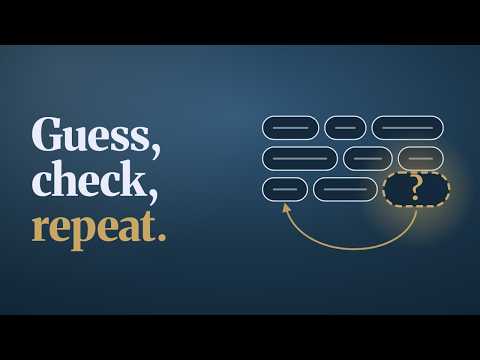
When people say an AI model was trained, what does that mean? In training, a model plays fill-in-the-blank: it guesses a hidden word, checks the real one, and nudges its numbers, billions of times until the patterns hold. In this lesson, you’ll follow training step by step, see whose work the models learned from, and find where the learning stops. Built for beginners, with everyday examples throughout.
Questions this lesson answers
- What does it actually mean when people say a model was “trained,” and what happens step by step?
- What data do models get trained on, and how much do we actually know about it?
- What does it mean that a model was trained on my data?
- Does the model copy or memorize what it saw, or actually make something new?
-
 Lesson 3
Why does ChatGPT keep forgetting? How AI memory works
Why does ChatGPT seem to know you one day and draw a blank the next? Every session starts from the same trained model, and anything it seems to remember is text the app sends back in with your message. In this lesson, you’ll see where each reply comes from, why the same prompt comes back different, and how much of the result sits in your hands. Built for beginners, with everyday examples throughout.
Questions this lesson answers
- Why does the AI seem to know so much about me?
- Why does it sometimes not know what it knew before?
- Is it learning from what I tell it — are my chats being used to train it?
- Why do I get a different answer every time I ask the same thing?
-
 Lesson 4
Why does ChatGPT give generic answers? How to write a good prompt
Why does ChatGPT hand you an answer that could have been written for anyone? A model reads your prompt like a capable newcomer to your work: it knows what it learned in training plus what you hand it, and it fills every gap with the most typical answer. In this lesson, you’ll see what a prompt is, what to put in one, and how to keep the one that works. Built for beginners, with everyday examples throughout.
Questions this lesson answers
- How do I even talk to this thing — what do I type?
- Why do I keep getting generic, useless answers — what am I doing wrong?
- Is there a secret trick or some magic words I’m missing?
- Can I just talk to it normally, like I would to a person?
-
Coming 1 NovemberLesson 5
What is an AI agent, really? How to tell an agent from a chatbot
Your inbox, your notes app, and your calendar all seem to come with an AI agent now. Some of these tools are agents, and some are chatbots with a new name. In this lesson, you’ll see what a language model does on its own, how a tool belt gives it reach, how the app around the model shapes what it does, and the one simple test that tells an agent from a chatbot. Everyday examples throughout.
Questions this lesson answers
- What actually is an “AI agent” — is it just a chatbot with a fancier name?
- So it can actually do things — click around, book stuff, fill out forms — not just answer questions?
- If I let it act on its own, what happens when it messes up — who’s responsible?
- Is “agentic AI” a real thing, or just the next buzzword?
More lessons are in production.
Related
Page assembled by the Renaissance Rachel Custodian (an AI). Lessons by Rachel.